About Ebykr
Ebykr celebrates classic and vintage lightweight bicycles through provocative imagery and opinion. Ride along with us.
About Ebykr
Ebykr celebrates classic and vintage lightweight bicycles through provocative imagery and opinion. Ride along with us.



Road bike racing likely comes to most people’s minds when they think about sports in Italy. Given this strong association, it’s no wonder the country is birthplace to so many of cycling’s most legendary figures. Mario Confente – in a lifetime shorter than most – gained a prominent place in cycling’s pantheon as both racer and builder, twin accomplishments few others can claim.
Confente was born in Montorio, a small town in the northerly province of Verona. Few could have guessed quiet Montorio was producing yet another Italian cycling legend on that cold day in late January, 1945. Time would come inform them all just how significant the day was.
Confente’s love affair with the bicycle began at an impressionable young age. He entered the road riding scene at just 13 years of age and a short five years later had already proven himself an especially capable member of the top “Dilettanti” or semi-pro Bencini cycling team in races at National and even World class levels. These efforts took Confente so far as winning multiple gold World Championship medals and a silver medal at the 1964 Tokyo Olympic Games while riding for Italy in the team time trial event alongside two of his Bencini teammates.
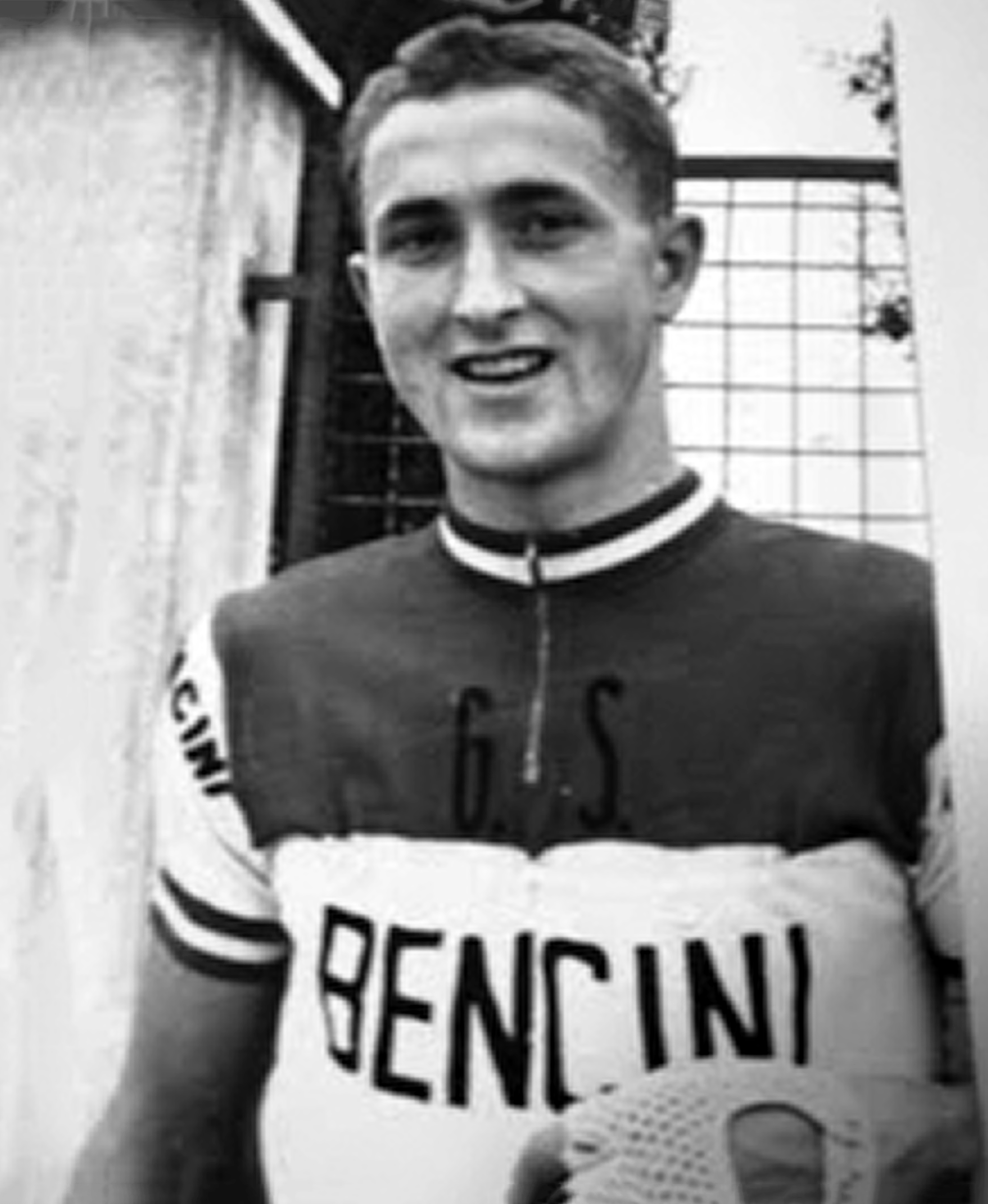
To support the growing demands of his racing successes, Confente looked inward to his own mechanical prowess and began producing frames himself. The outstanding quality of Confente’s work was immediately recognized by fellow racers and his frame building skills became even more desirable than his formidable bike racing skills. Recognizing the opportunity, Confente’s father built his son a small workshop at the family home in 1968. By 1970, a contract with Bianchi made it clear Confente needed to hire help and move to a facility able to handle the increased production demand.
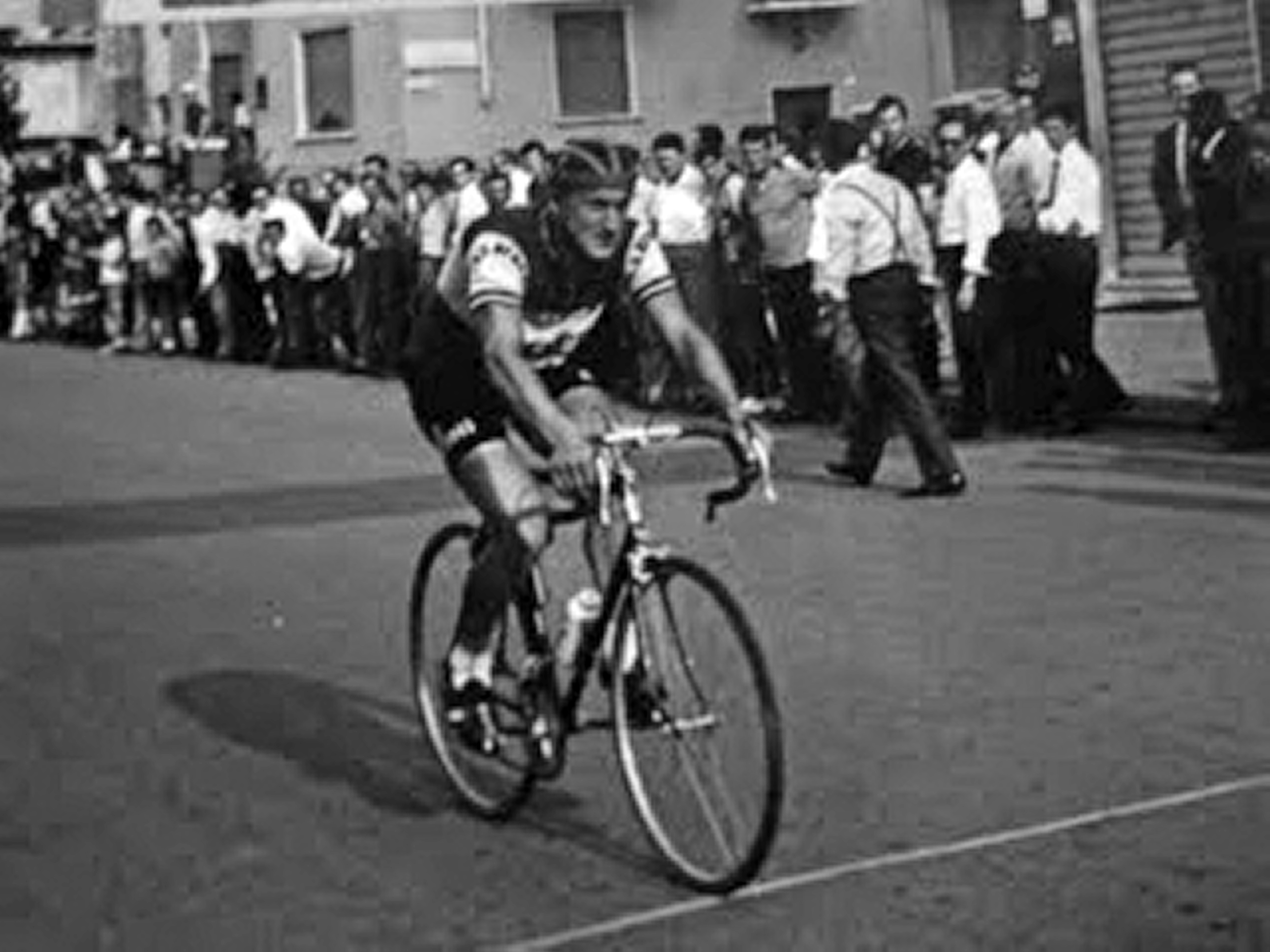
The next leap forward in Confente’s life came when he started producing frames for Alberto Masi and his namesake company. As bicycle sales tapered in Italy and the U.S. market surged because of the energy crisis, Confente was moved overseas to step up Masi operations in North America. While at Masi, Confente met a young painter named Jim Cunningham. Cunningham reminisces about their first meeting:
“I joined Masi California late in 1975. Mario was the master builder and I handled all the painting. I was an 18 year old bike racing enthusiast who grew up seriously afflicted with a model building hobby that left me with paint and decal skills and real admiration for hand craftsmanship.” Mutual respect between builder and painter grew rapidly and a bond formed that many cycling fanatics will find familiar.
“My initial impression was that Mario was highly skilled in his craft, and while limited in English, he usually managed to make his meaning clear. When I was first introduced to him as the new painter, Mario asked if I rode bikes. I answered “yes”, and he followed with “like this”, imitating an aggressive rider hunched over deep drop bars and throwing the bike side to side in an attack. I responded, “Yes, like that, and on an Italian bike, but not as good as a Masi.”
It wasn’t long before Cunningham came to experience the generous nature and personable character that Confente was admired for by many. “Young women were always greeted with a loud “Ciao Bella”, when things were going well in the shop and he sang Italian arias in a full, strong voice.”
“One day, perhaps a week into my tenure at Masi, a wire hook that held frames on the painting stand broke. I was two steps away and caught the frame but not until it had bounced hard once, flattening part of the bottom bracket shell with a loud “prannggg” sound. The rest of the shop went silent and when Mario opened the spray booth door, I expected anger and possible dismissal.”
“Instead, he calmly inspected the hook, said, “make new ones” and took the frame. A few minutes later he returned having reshaped the shell, which looked just as is did before the damage. This calm focus on solutions and care for the emotion of his assistant was not what I expected from this passionate and vocal Italian, but it increased my respect for his self discipline and maturity.”
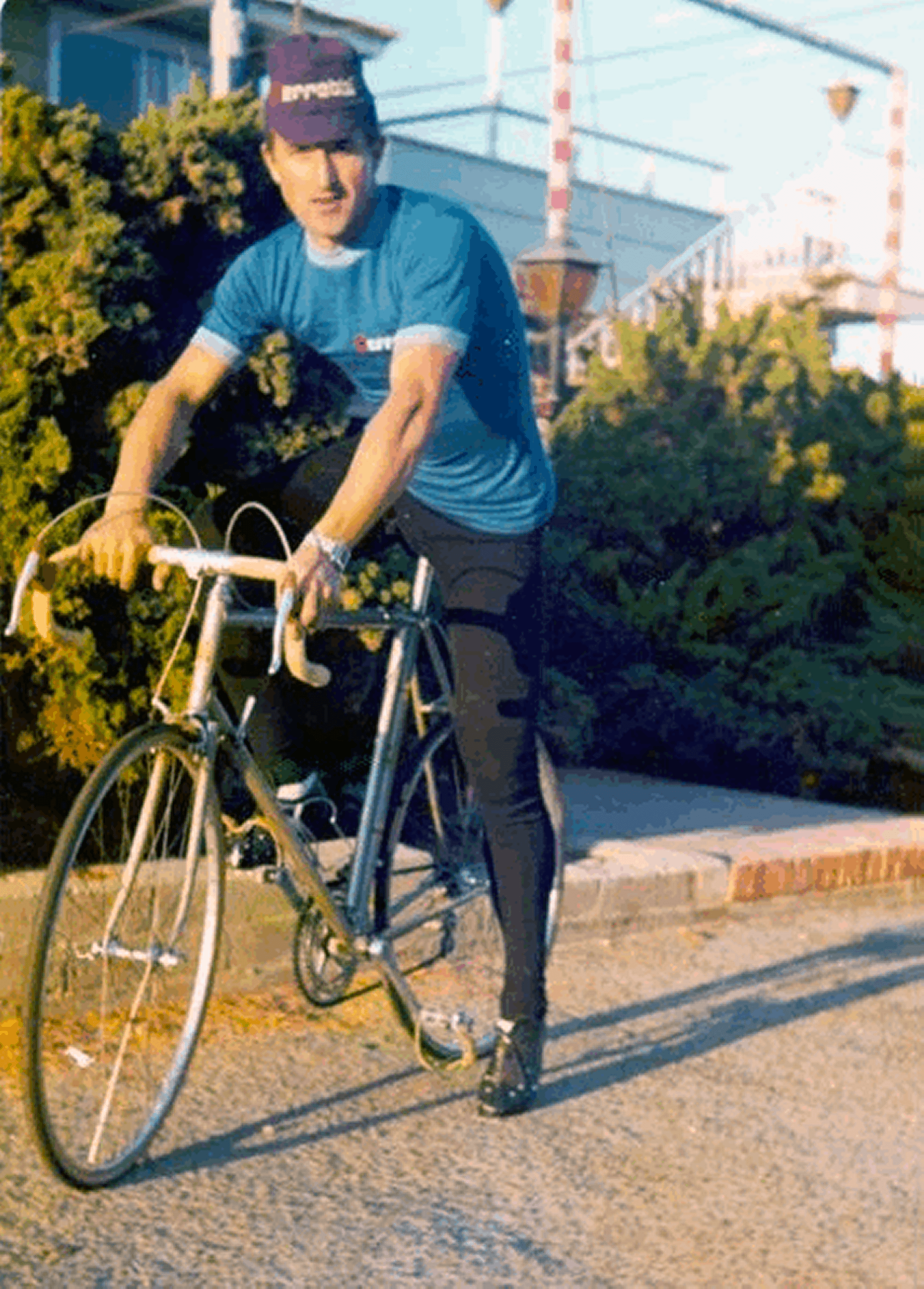
Another, more serious accident in their shared workplace led to important discussions between Confente and Cunningham – and further paved the way for their friendship and partnership to follow. Cunningham clearly remembers Confente confiding his needs to effect changes in his career:
“Early in my tenure at Masi, Mario suffered a nasty cut to his hand. I took him to the doctor. While driving and waiting we had our first chance to talk in private. I began to learn Mario’s ambitions and frustrations with his current position. I remember the doctor telling Mario that there might be some ligament damage that could affect range of motion in a fairly casual way.”
“Alarmed, I told the doctor, that he was working on the hands of a master craftsman, the “Stradivarius of bicycles” after which he seemed much more thorough in his examination and treatment. I had not intended to flatter Mario, but he seemed to appreciate the comparison.”
“Later, when building Confente frames, Mario would make no apology for plainly stating that he built the world’s best bicycles. From him, it seemed an honest statement of fact.”
“One of the dynamics that came up between Mario and me was that he found some employees of the U.S. Masi company seemed to think that their employment there entitled them to an education in frame building – and as soon as they were barely competent, they would leave to build their own frames. This never-ending cycle of training was a drain on productivity.”
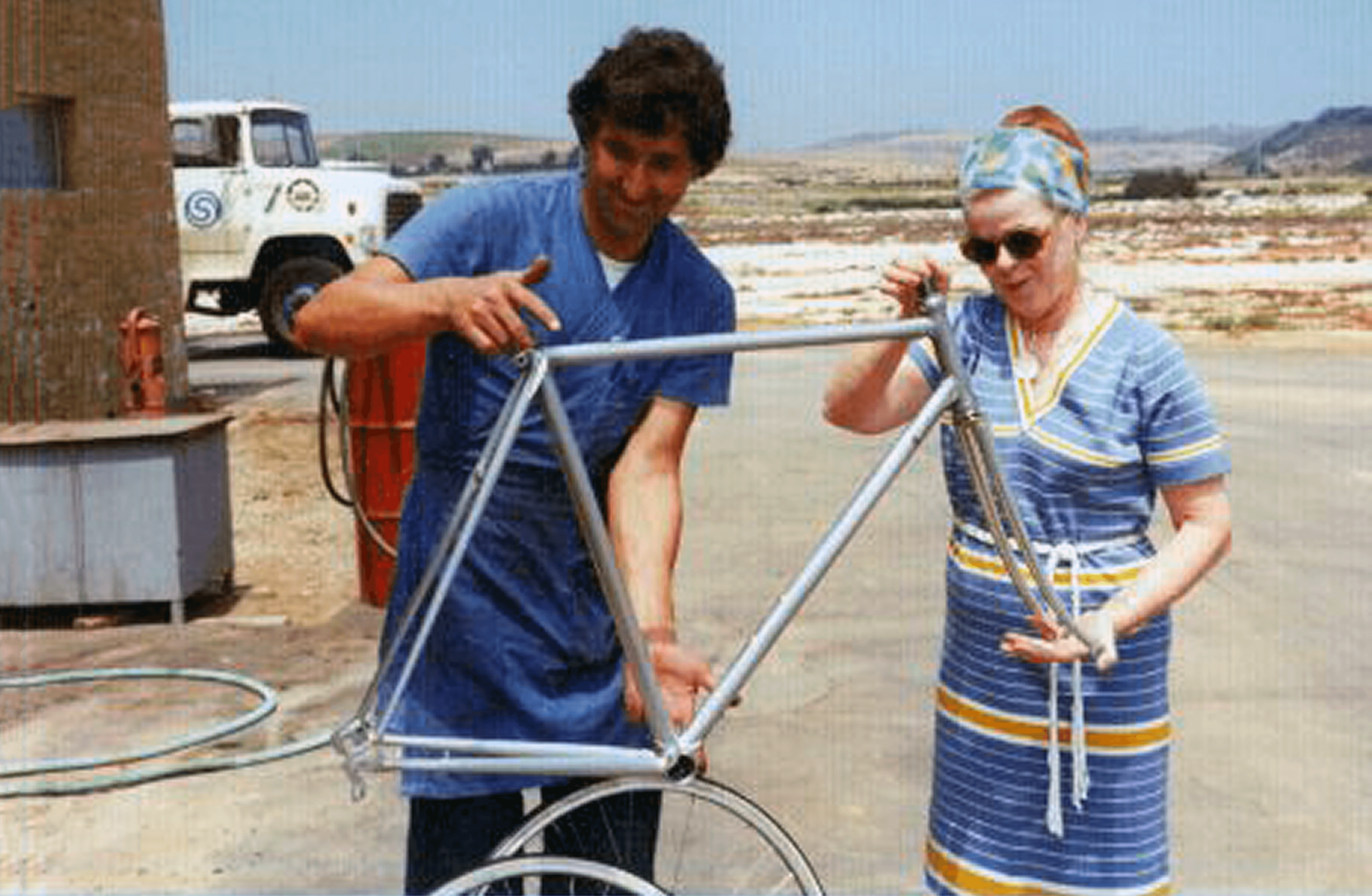
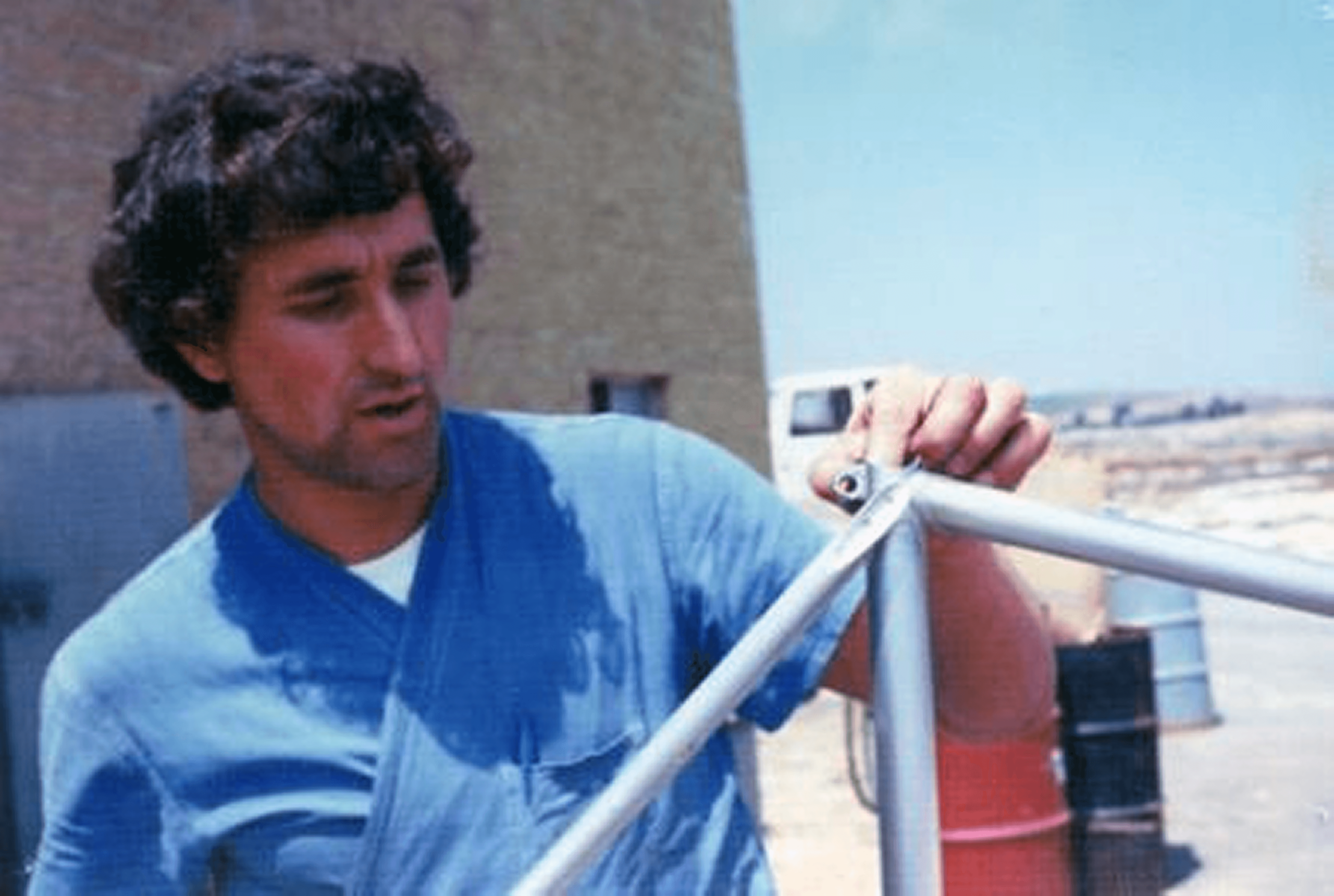
“This contrasted with Italy, where there was an established tradition of apprentices who did not earn full wages during their education and it was more difficult for independent builders to establish themselves. It was never my intention to become a frame builder – if I worked with Mario, I could help him establish his operation by handling some of the paper work needed to get going and then paint his frames. Since I could always paint more than Mario could build, it seemed that we could develop two symbiotic companies.”
For most young framebuilders the opportunity to work for a company with the repute of Masi would be a dream come true, but according to Cunningham, working with Masi ended up constraining Confente’s independence.
“Mario had worked for Sieber, Pogliaghi and Bianchi and had some success in his independent shop until he was hobbled there by being blacklisted and unable to buy supplies. He survived as a subcontractor to big name builders. It was not until Mario was in California that he discovered that Faliero Masi himself had initiated the strangulation of Mario’s nascent independent frame building operation.”
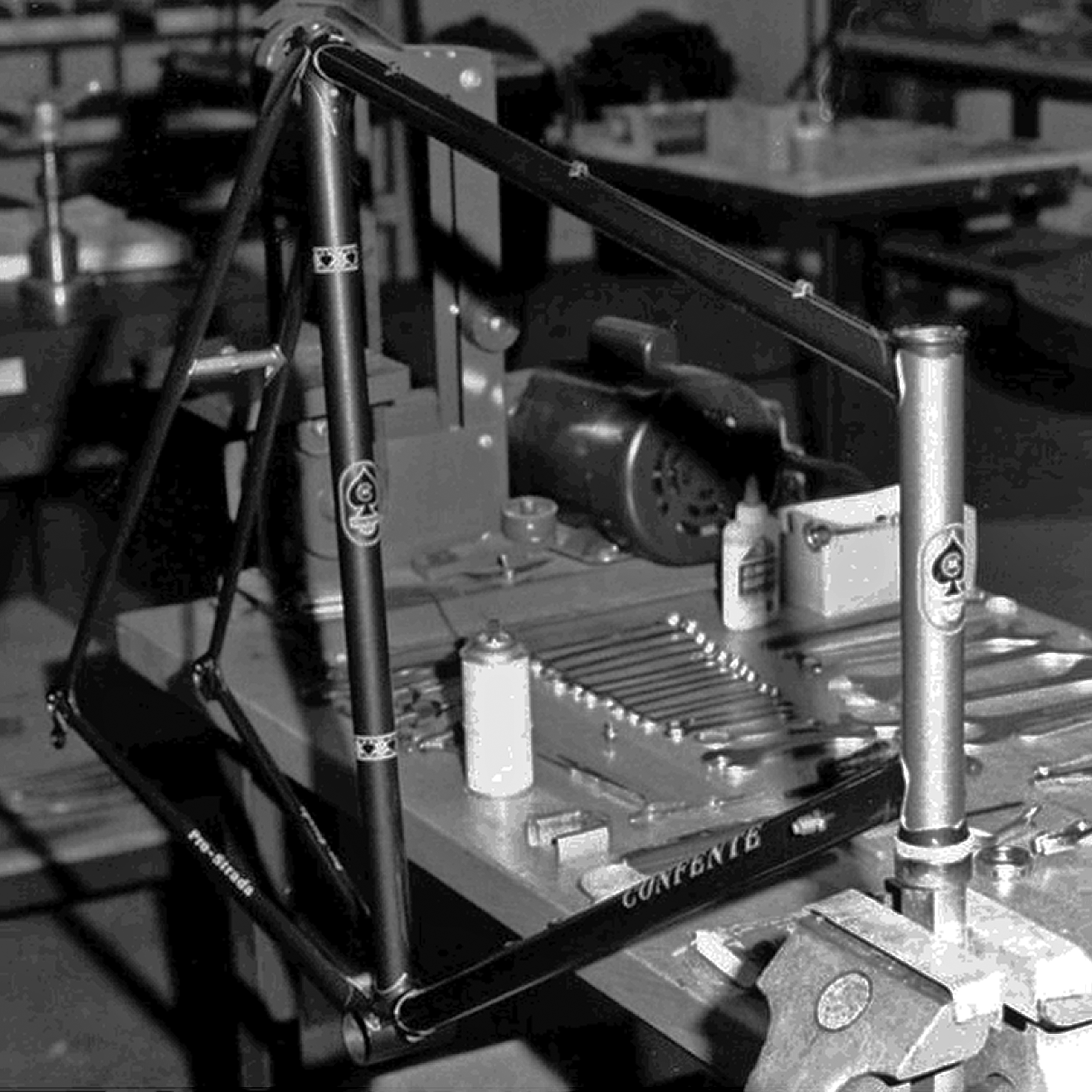
“Mario had been brought to California because Masi had been so dependant on local [Italian] subcontractors at the time that when he signed the deal to set up the U.S. company, he had to bring some of his subcontractors along to help establish the [new] shop. Mario had not expected to be in the U.S. long, but soon saw it as a place to regain his freedom.”
“Mario grew up a fan of American cowboy movies and John Wayne in particular. Despite the glare of Hollywood, Mario thought he glimpsed truth in the Duke’s honest and independent spirit. They both believed that in America more than anywhere else, destiny was in every man’s hands and great success was possible.”
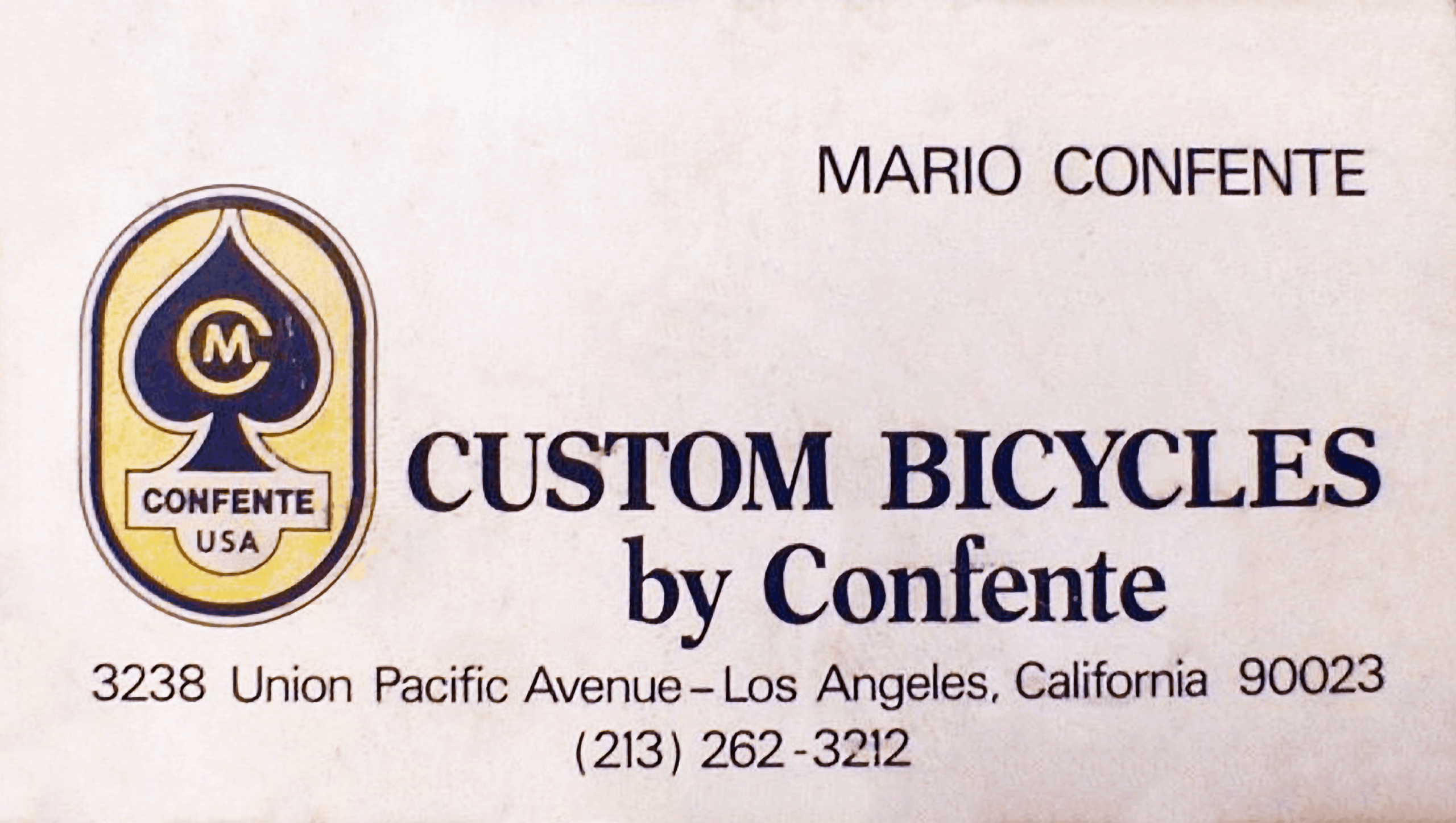
When businessman Bill Recht hired Confente to build bikes and Custom Bicycles by Confente was first founded, the partnership resulted in frames that became renowned for combining American quality and Italian style – a mix that proved very desirable among the racing elite. This combination came at a price, but Mario worked hard to produce the best frames he possibly could.
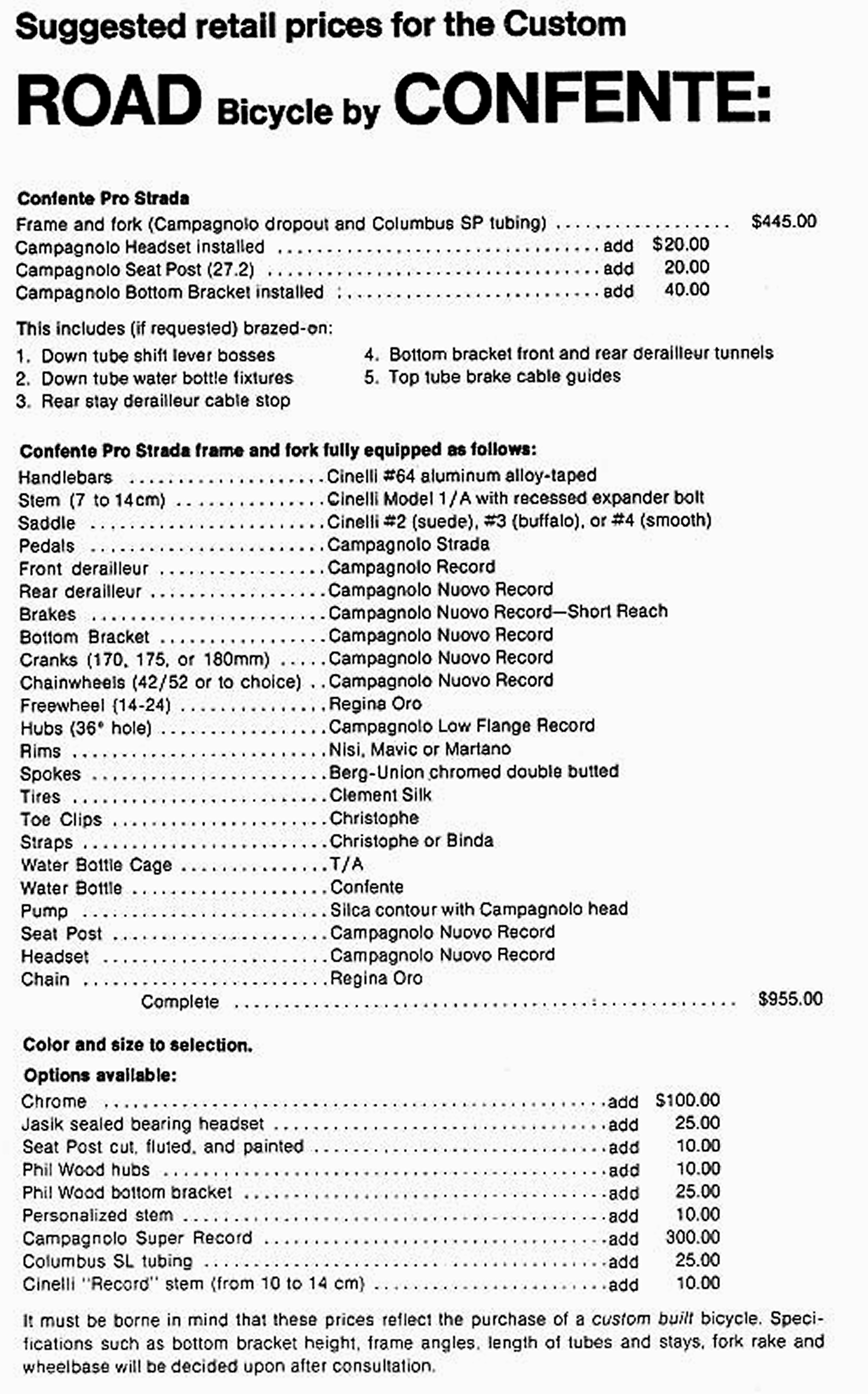
Cunningham remarks, “Mario told me that his fellow frame builders in Italy thought he was crazy in that his work was better than it had to be. Clearly he raised the bar. Mario was also bold enough to charge considerably more than other custom builders. His frames were $500 at a time when most other top builders were $300 or less. Builders like Richard Sachs saw the craftsmanship and price tag and followed Mario’s lead.”
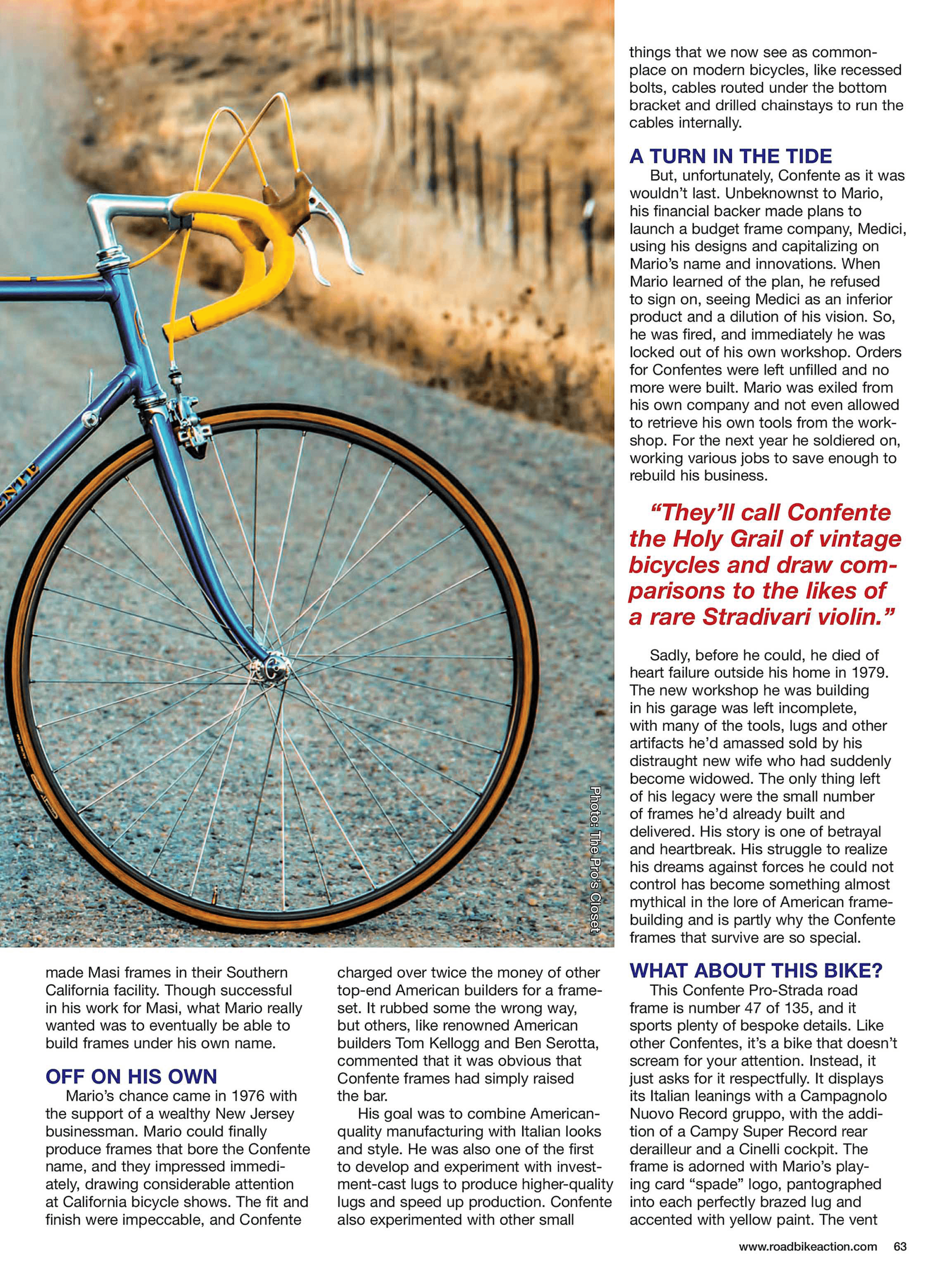
“Of course, Mario was also a leader in the development of attractive investment cast lugs. As such, he virtually obsoleted his own strongest skills, that is, shaping beautiful lugs from rough stampings or castings and brass brazing. Investment cast lugs take much of the skilled hand labor out of steel lugged frame building. They have the close tolerances to permit use of low temperature sliver brazing, but allow less design flexibility and [require] greater capital investment.”
While Mario Confente plugged away perfecting his own namesake frames, Jim Cunningham set up his very own business, CyclArt, where he serviced new clients while remaining loyal to finishing Confente’s products. This arm’s-length separation would prove to be prescient.
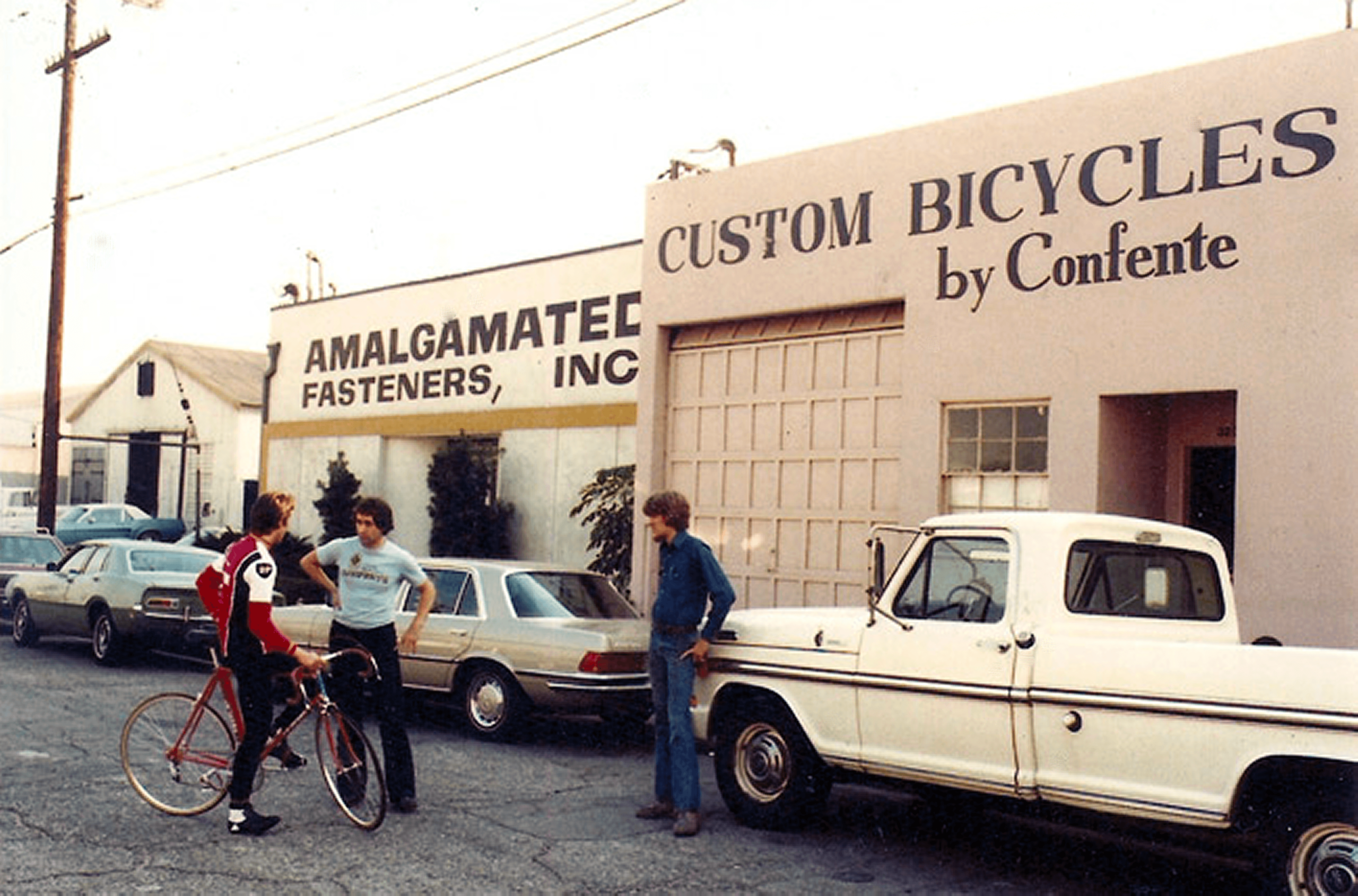
“Because Mario clearly wanted to reestablish his independence, and we agreed to two separate companies, I did not view myself as an actual partner in his business,” states Cunningham. “When we negotiated the financing agreement with Bill Recht, we had a clear understanding that I insisted Mario get in writing, but he wanted to do the deal on a handshake. Had I been a partner, or a bit less respectful of his leadership or privacy, I would have not have let that happen.”
Indeed, tables turned for Confente when Recht undermined him by planning to launch a cheaper and inferior frame under the Confente name. It was difficult for Confente to discover Recht had been misrepresenting his place in the company all along. “He thought he had found a cycle-enthusiast benefactor in Bill Recht to finance the start-up of his U.S. operations, but came to feel he was misled, and that his designs would be taken to set up a larger operation.”
Adds Cunningham, “Mario thought he was operating his own company, and did not realize the fact that his paychecks were routed through Recht’s local company “for convenience” meant that technically Mario was an employee. As such, tooling, patentable designs and more that Mario developed belonged to his “employer.” Since Confente was developing investment cast lugs and other things then-considered revolutionary, this was a big deal. It’s very sad that Mario never got to achieve his [full] potential.”
Confente resigned and Recht responded by locking him out of the factory, even withholding access to his tools. An upset Confente drove to Monterey where he connected with George Farrier and once again began producing frames. Although the arrangement was more comfortable for Confente, he still longed for his own operation. His energies were directed toward starting a new life, putting together a plan with Jim Cunningham and reuniting with longtime girlfriend, Lisa, after sharing a past mixed with joy and sorrow.
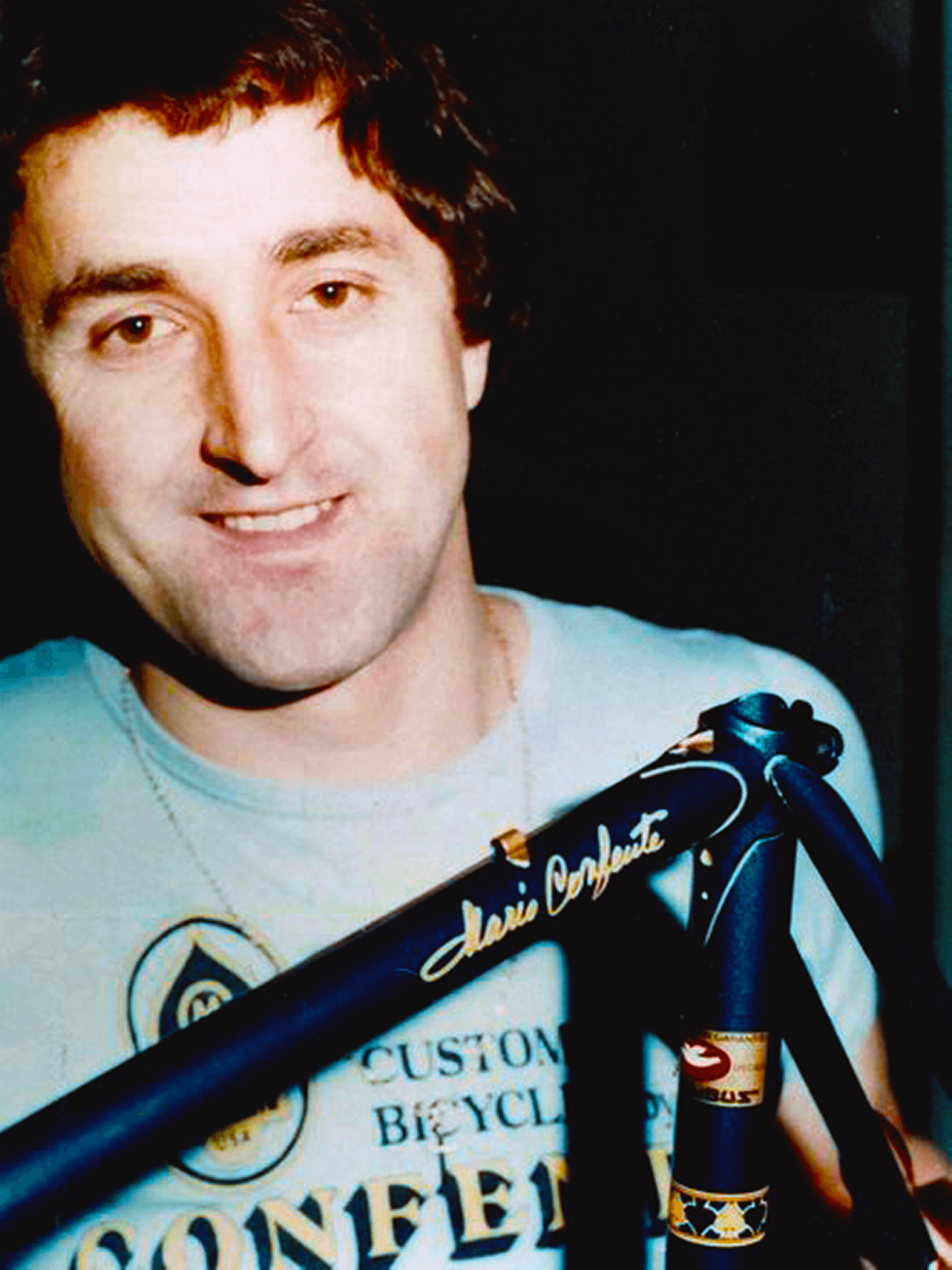
While his devotion to the bicycle seemed at times greater than his desire to forge a working relationship with his girlfriend, Confente stands out in Cunningham’s mind as a man victimized by his own demands on himself:
“I believe many famous artists have lived with undiagnosed Manic Depressive or Obsessive Compulsive Disorders and romanticized accounts of their lives leave many with the idea that creative genius is shadowed by an uneven or prickly personality. I don’t think Mario had any such disorder. I think Mario considered himself a craftsman, not an artist. What drives some artists and craftsmen to great accomplishment with or without M/D or OCD is passion for their work.”
“Mario had great self-discipline, a passion for his craft and “the bicycle” as he called his work, was clearly his first priority. His focus on and dedication to “the bicycle” was much like that of a devout religious man. There was purity and trusting innocence about him that also made him vulnerable to exploitation.”
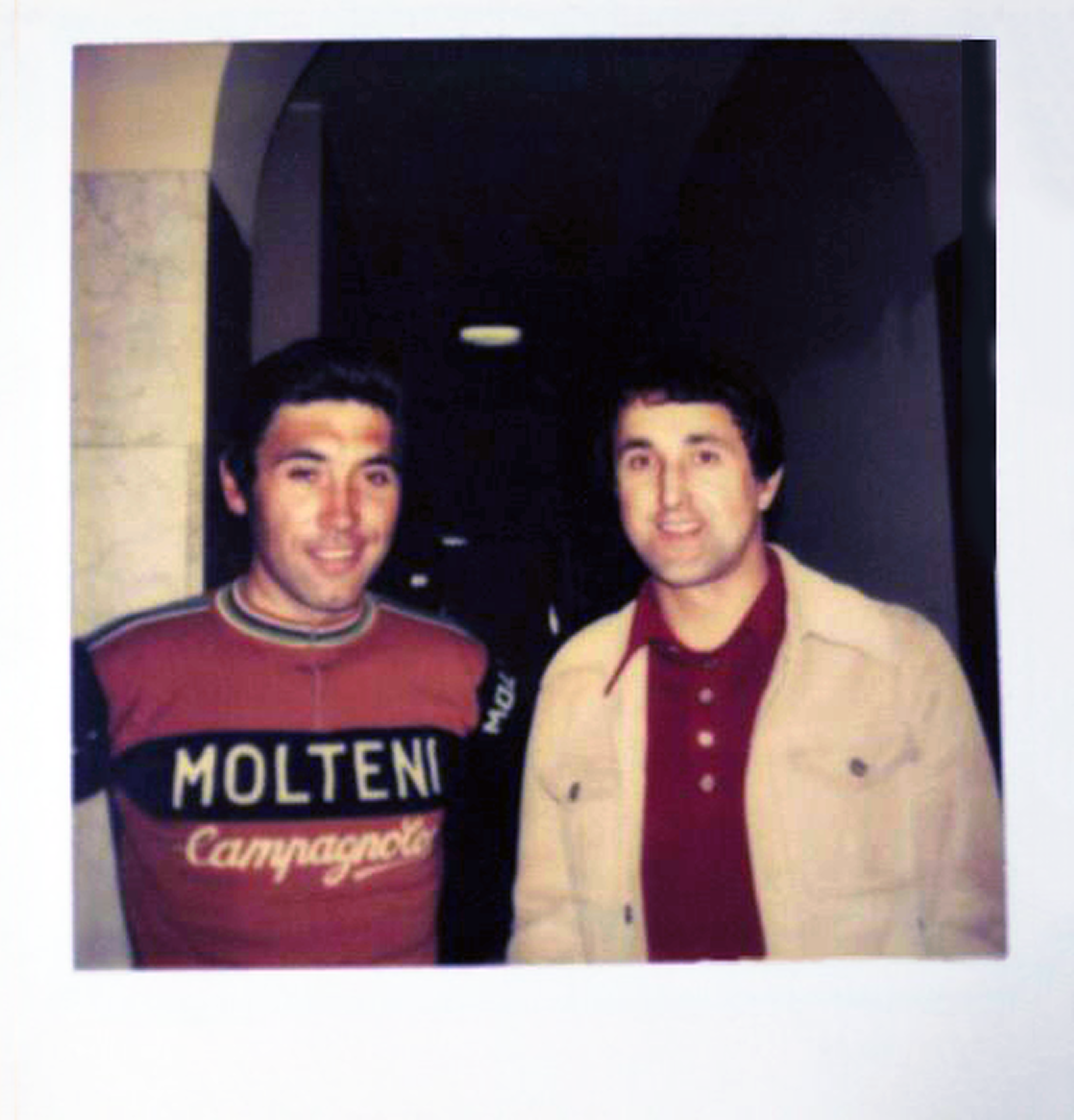
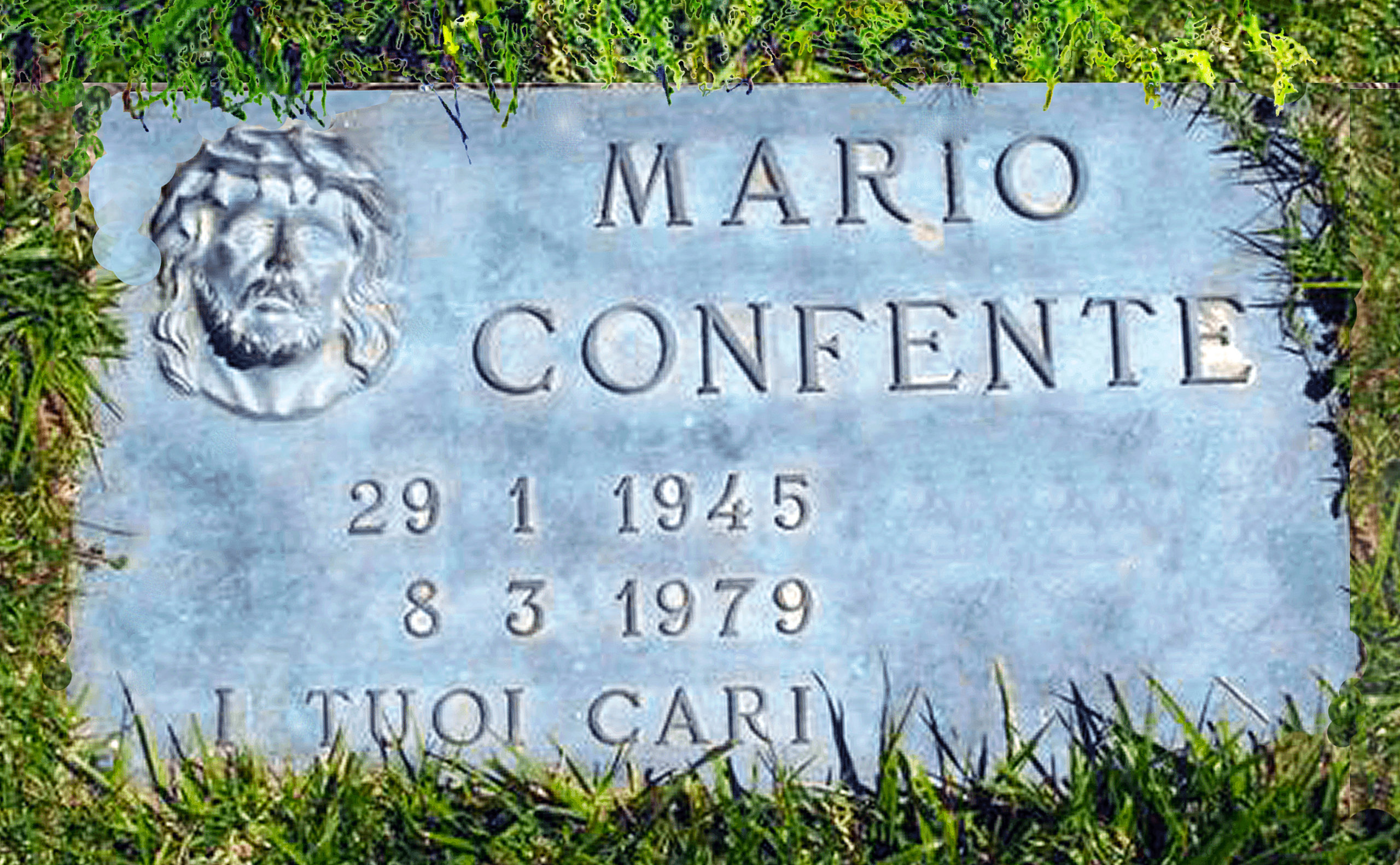
Close to achieving his goals of establishing a new shop and finding true love, Mario Confente died just two weeks after his marriage to Lisa. The master builder’s death came as a complete shock to those who knew him. Jim Cunningham explains:
“Mario’s autopsy showed that he died of a coronary aneurysm. His heart was heavily scarred and almost 300% normal size. The doctor I spoke to said that he had obviously suffered many smaller tears of the heart wall during exertion. He felt that any serious medical exam, such as one might get on admission for an Olympic team, would have turned up the problem and the patient would have been advised to avoid exertion immediately. I think Mario’s [bicycle racing] career may have been ended by such a diagnosis.”
“Mario never mentioned heart trouble to me or to his wife Lisa. Perhaps he did not want to concern us. Perhaps it was pride.”
“There was obvious passion for riding in Mario. Despite frequent suggestions, I only got him out on his bike a handful of times, he seemed to agree to ride as an antidote for the darkest times.”
When asked to share his fondest memories of working with Confente, perhaps an unfair request of someone who spent so much time with this special figure, Cunningham’s answer was succinct but wonderfully vivid:
“Watching Mario interact with his clients. I remember Jerry Ash, Don Mitchell, and Kareem Abdul Jabbar in particular. Seeing his pride after taking a freshly brazed frame, locking it into the fixtures on his granite checking table and confirming that the alignment was within a hair’s breadth at every measuring point.”
“Hearing him sing while working.”
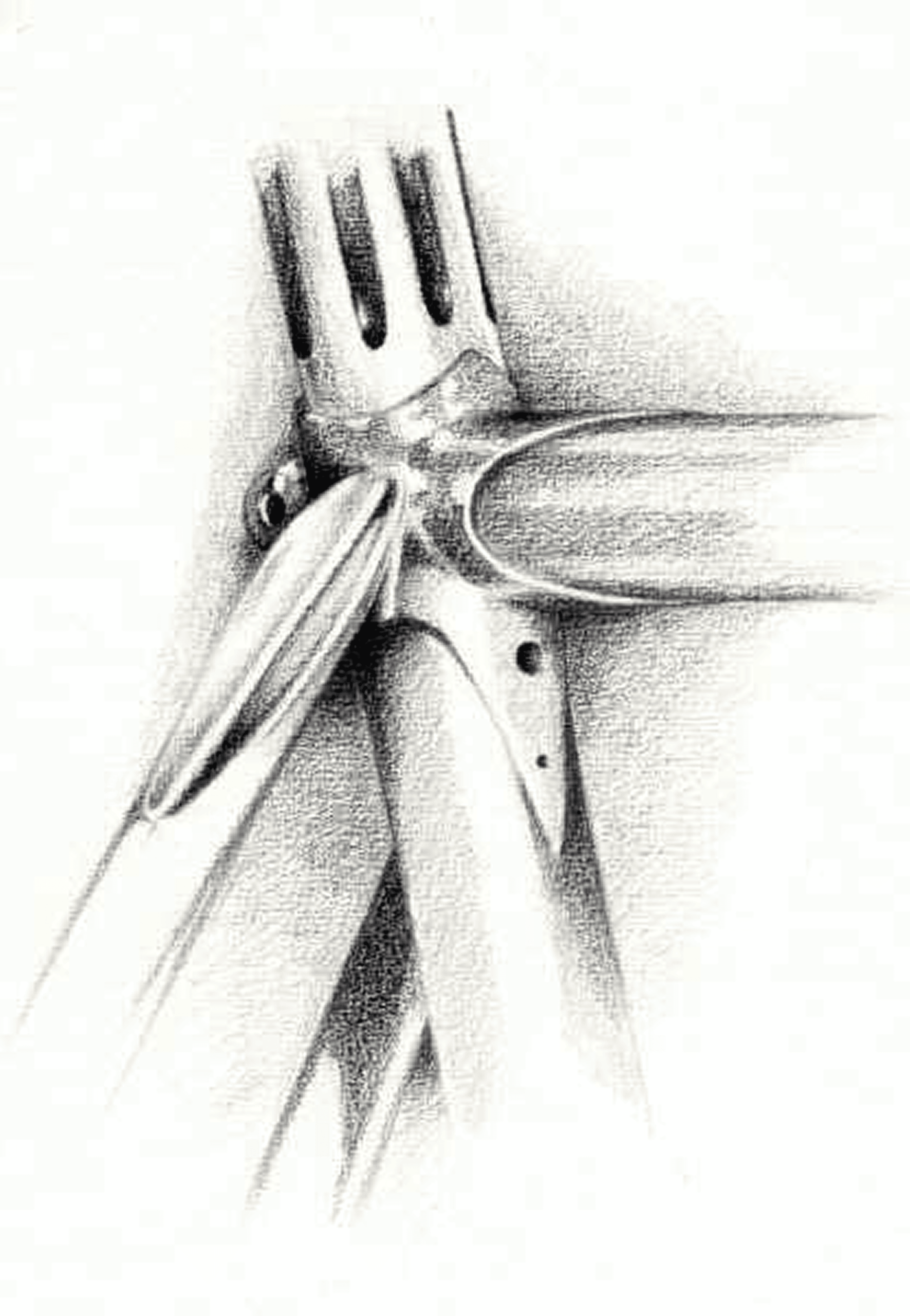
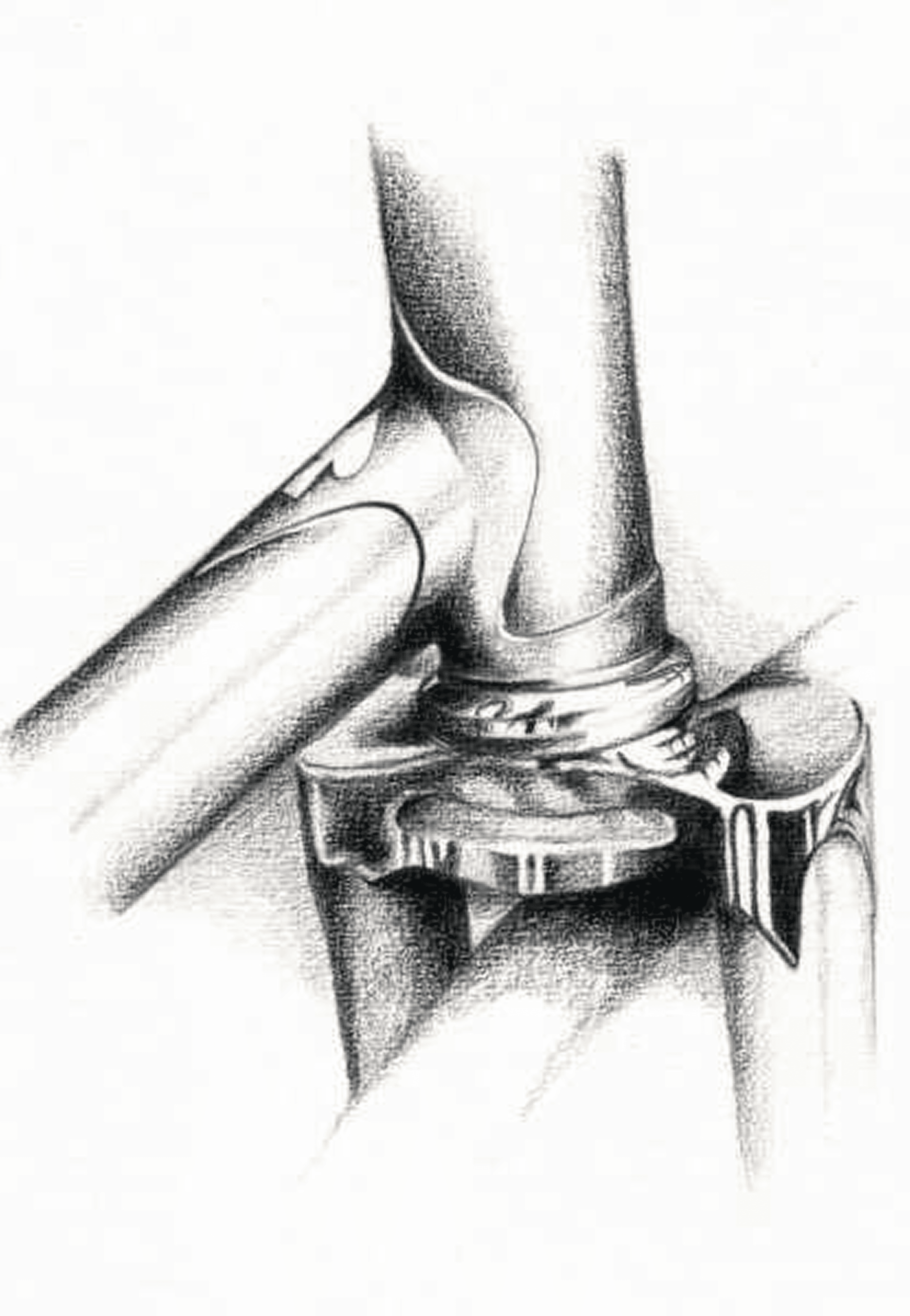
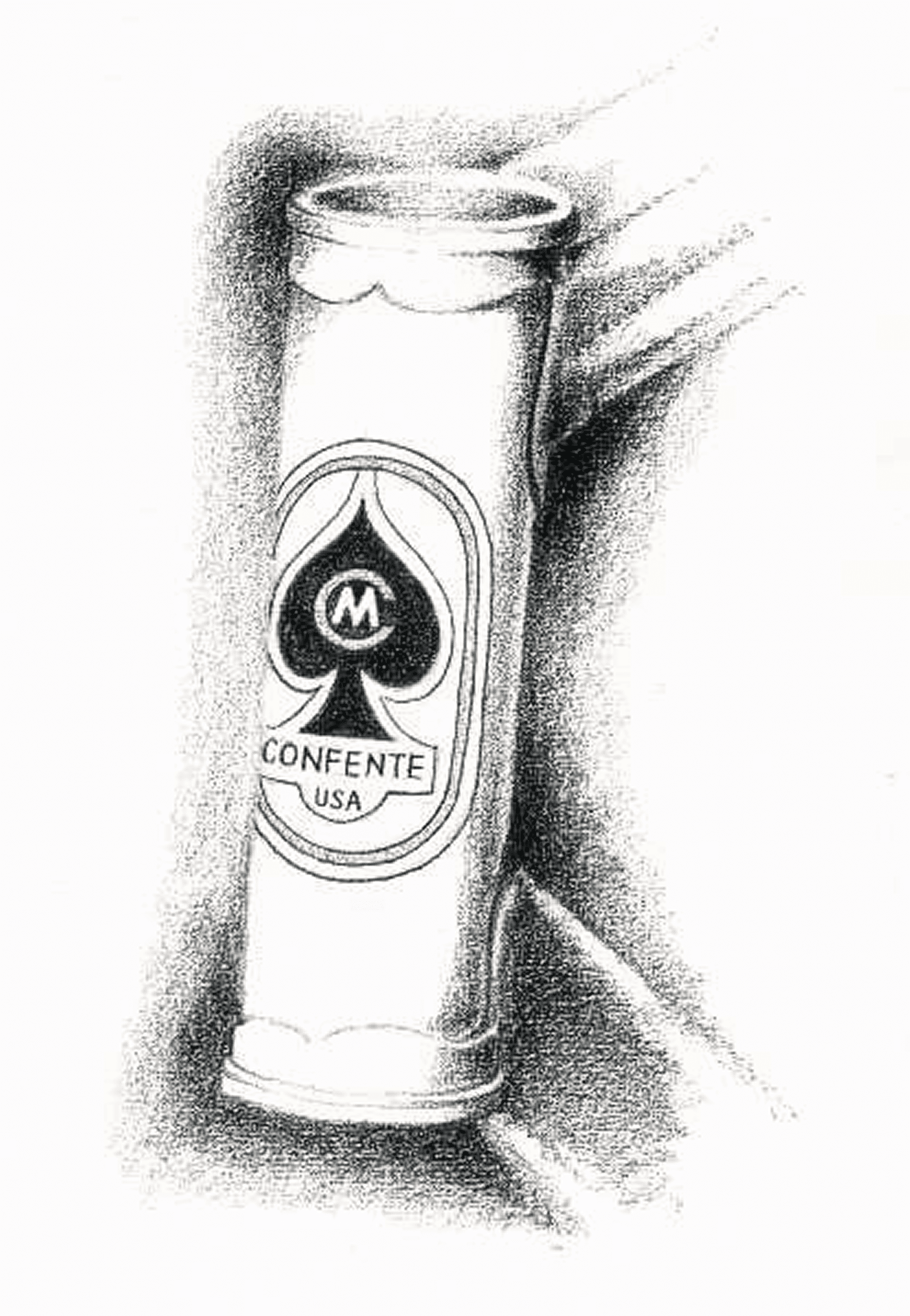
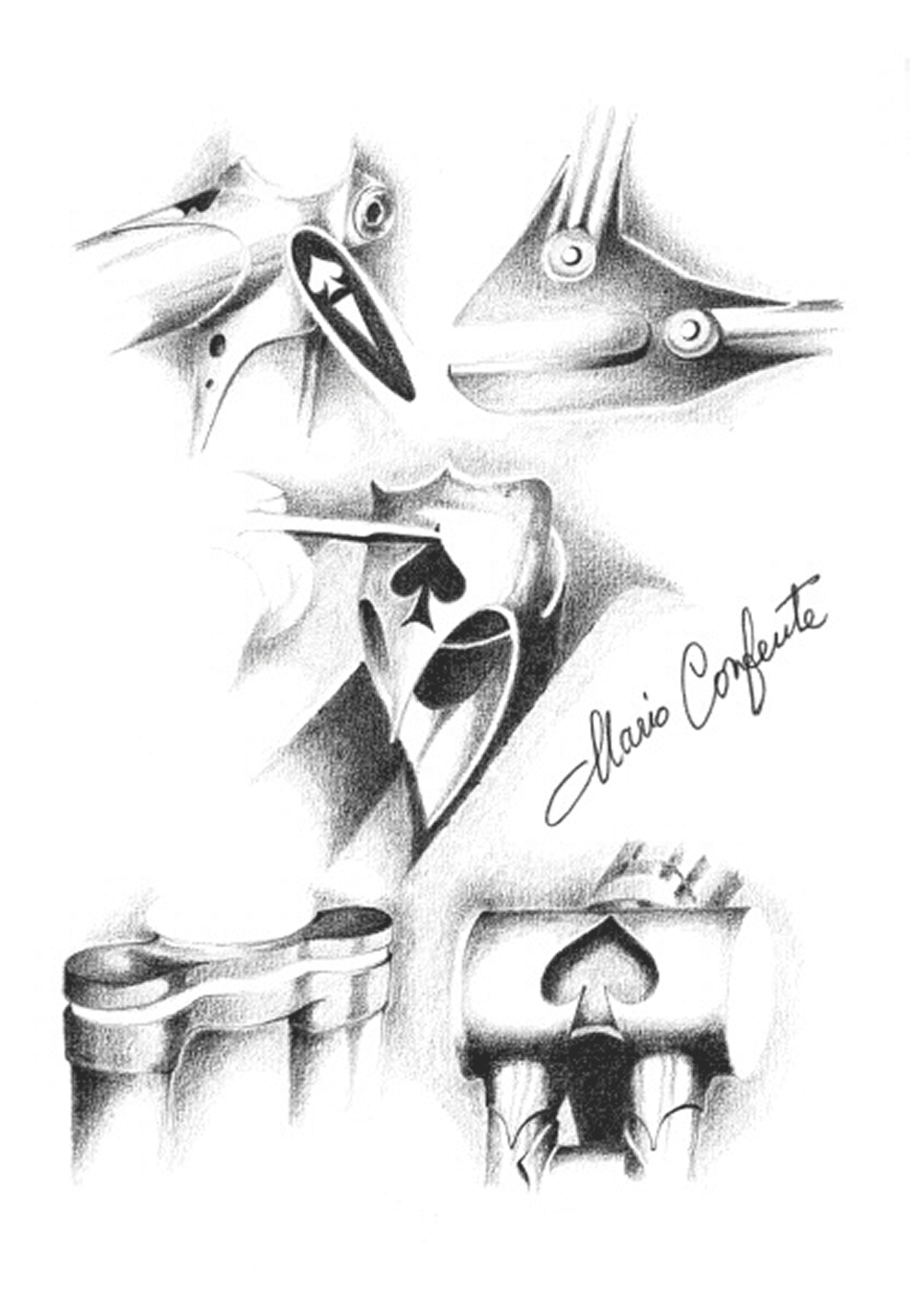
By all accounts, 34 years was far too short a time for Mario Confente to occupy our earth. His tremendous achievements as a world-class bicycle racer turned world-class frame builder were only overshadowed by the kindness and generosity exuded from his persona. Cunningham sums up the loss of Confente with elegant simplicity:
“We lost a man of passion and integrity. He inspired me to my career. He would have inspired many others had he lived longer.”
The cycling world agrees wholeheartedly. Confente’s legacy lives on through his work and a handful of descendants whose lives he touched.
Many thanks to Jim Cunningham of CyclArt for providing firsthand insight into the life and person of Mario Confente. His colorful perspective is appreciated very much, as is his wonderful work over the years.
Added thanks to Angelo Senza of the Italian Cycling Journal for providing wonderful photographs of Mario Confente and his fine work. Check out Angelo’s great site here to learn all about Mario Confente and much more.
The following websites also served as sources of information for this article: BicycleTrader.com, CampyOnly.com and CyclArt.com
 Confente
Ebykr documents this marque across the archive. Here is the rest of it.
The Ebykr Digest
New articles, timelines, catalog finds and registry activity — assembled from the archive once a month. Your address is never shared.
Double opt-in. One email per month. Unsubscribe at any time with one click.
Join the conversation below, or bring longer discussions and photos to the Ebykr Forums.

“These efforts took Confente so far as winning multiple gold World Championship medals and a silver medal at the 1964 Tokyo Olympic Games while riding for Italy in the team time trial event alongside two of his Bencini teammates.”
Silver medal at the 1964 Olympics men’s100 km team time trial? Not according to Wiki or Olympics.com. 1963 Amateur worlds championships? No, another Italian won.
This appears to be a misinterpretation of earlier publications where the other Bencini team members won the medals.
you know, john boyer has several confente bikes-i bought one several years ago-and knew him quite well. also, roland della santa has aquired many of marios tools
Going via the testimony of this website, and another that I’ve read: this be the 2nd most interesting MASI-related piece that I’ve read, yet.
Fabulously interesting article, Susan and Jim. Thanks for helping us better understand this decent person and oft celebrated but little known cycling legend. Anytime such a brilliant star’s career ends so early it makes you wonder what might have been. Certainly this time is no exception.