About Ebykr
Ebykr celebrates classic and vintage lightweight bicycles through provocative imagery and opinion. Ride along with us.
About Ebykr
Ebykr celebrates classic and vintage lightweight bicycles through provocative imagery and opinion. Ride along with us.

Histories, timelines, guides, build sheets and galleries: 147 articles on 47 makers of classic lightweight bicycles and the parts they were built with.
Ranked by what readers opened in the last 30 days, one per maker.

 RaleighGuide
Date a vintage Raleigh from its model, frame number, Sturmey-Archer hub dates and decals, and learn which of its serial numbers cannot be trusted.
 BridgestoneHistory
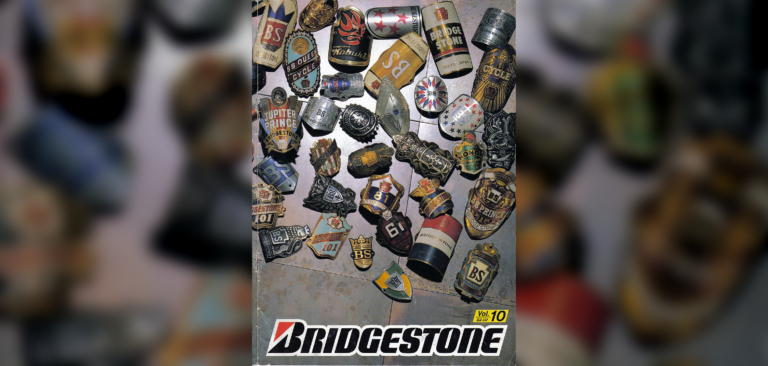
Bridgestone bicycles in the US, from the Grant Petersen years to the RB-1, RB-T, MB-1 and XO-1, with 1994 catalog pages and a rider’s view of the RB-T.
 PeugeotGuide
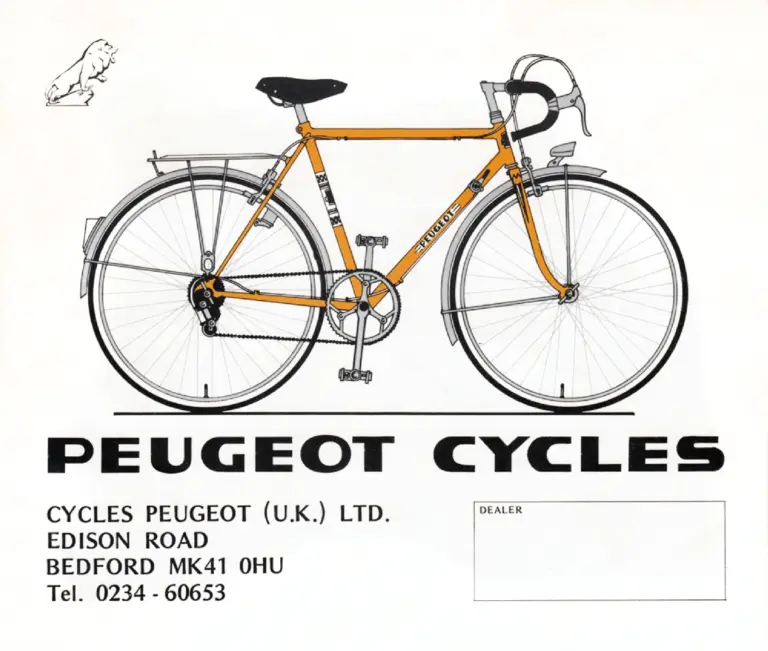
Date a vintage Peugeot by reading its model, frame, component codes and decals together; its serial number carries a date only from 1976.
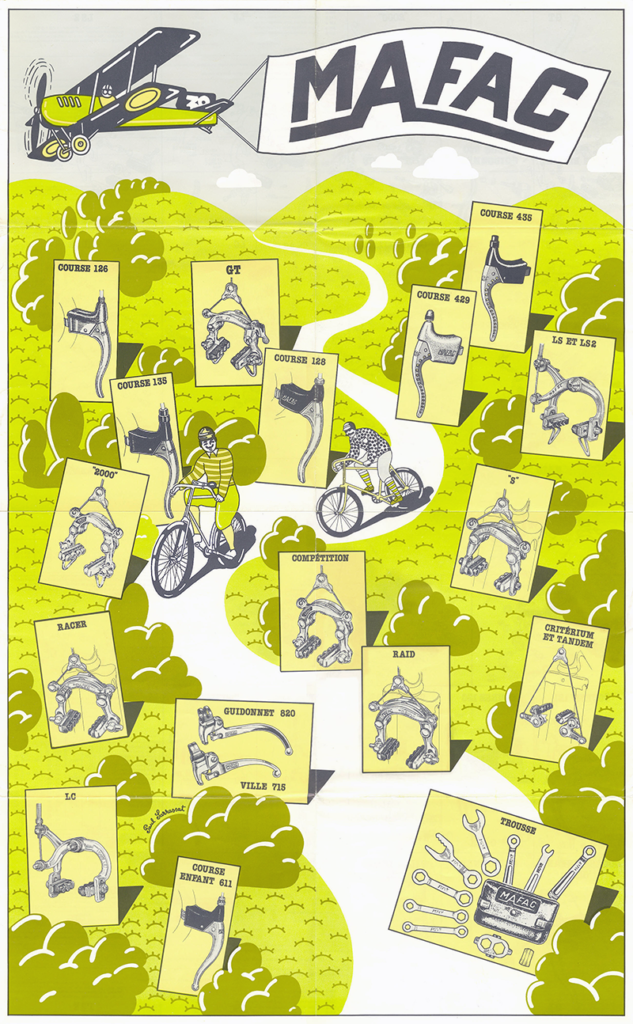
 MafacHistory
MAFAC of Clermont-Ferrand from Auguste Bourdel's founding in 1946: the Criterium cantilever, the Racer center-pull, Rebour's drawings and the firm's end.
The 12 makers with the most articles. Each shows its articles below, with its Timeline and archive.
 Bianchi9 articles
 Legnano6 articles
 Idéale6 articles
 Routens6 articles
 Brooks5 articles
 Mercier5 articles
 Colnago5 articles
 Automoto5 articlesRaleigh4 articlesPeugeot4 articles
 Fuji4 articles
 Schwinn4 articles
 Alex Singer2 articles
 Bayliss-Wiley2 articlesBridgestone3 articles
 Caminade4 articles
 Campagnolo3 articles
 Carlton2 articlesCavalieri1 article
 Cinelli3 articles
 Confente1 article
 Cycle de France1 article
 De Rosa2 articles
 Drysdale1 article
 Duralumin2 articles
 Gitane2 articles
 Goëland2 articles
 Hetchins2 articles
 Hobbs of Barbican3 articles
 Holdsworth2 articles
 Le Chemineau1 article
 Lefol2 articlesMafac3 articles
 Masi2 articles
 Maury4 articles
 Mavic2 articles
 Maxi-Car3 articles
 Motobecane1 article
 Nagasawa1 article
 Pierce3 articles
 Rafale1 article
 Rene Herse2 articles
 Reynolds1 article
 Rivendell1 article
 Spécialités TA3 articles
 Stronglight2 articles
 Terrot3 articles
Threads that run across makers.
Four formats also have an index of their own.
Long-form maker histories and profiles
Every dated event in a maker’s life
Identify, date, care for and repair
One bicycle, measured and photographed
Pictures first: galleries and photo essays
The latest articles, newest first.
Filters combine; each count says how many articles a choice leaves. The address bar keeps your choices, so a filtered list can be shared.
RaleighGuideDate a vintage Raleigh from its model, frame number, Sturmey-Archer hub dates and decals, and learn which of its serial numbers cannot be trusted.
BridgestoneHistoryBridgestone bicycles in the US, from the Grant Petersen years to the RB-1, RB-T, MB-1 and XO-1, with 1994 catalog pages and a rider’s view of the RB-T.
PeugeotGuideDate a vintage Peugeot by reading its model, frame, component codes and decals together; its serial number carries a date only from 1976.
MafacHistoryMAFAC of Clermont-Ferrand from Auguste Bourdel's founding in 1946: the Criterium cantilever, the Racer center-pull, Rebour's drawings and the firm's end.
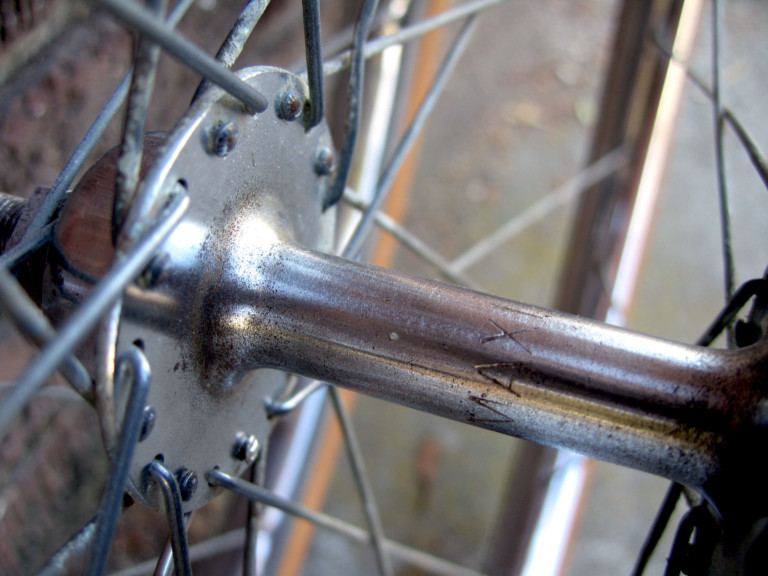
How to date a classic bicycle from the codes stamped into its parts, maker by maker: Shimano, Campagnolo, Sturmey-Archer, Maillard, Simplex and more.
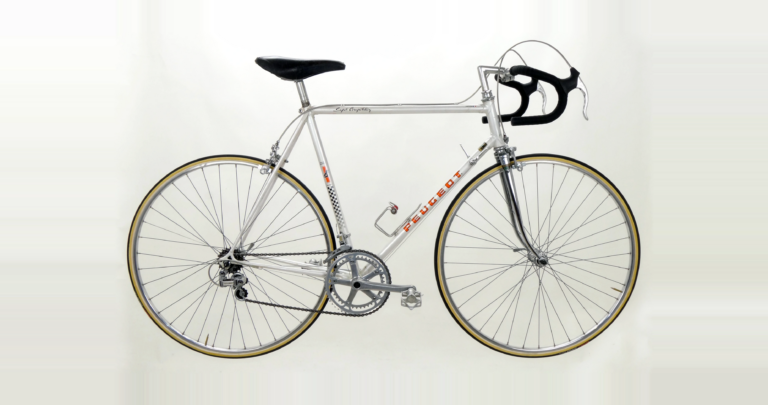 PeugeotHistory
Cycles Peugeot from a Montbéliard steel foundry to 10 Tour de France titles: the family split over cars, the PX-10 and the checkerboard era.
 BianchiHistory
Founded in Milan in 1885, Bianchi is the oldest bicycle company still building bicycles. The full story: the safety bicycle, royal patronage, celeste, Fausto Coppi and the classic models.
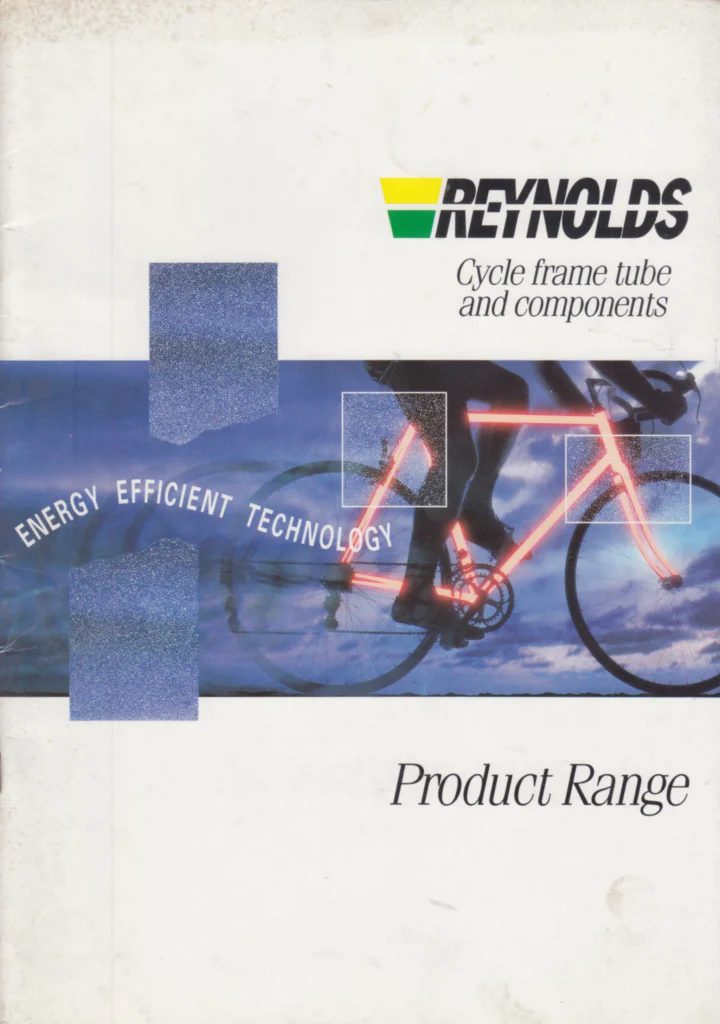 ReynoldsGuide
Read a Reynolds transfer properly: what each mark guarantees, how its small print dates a frame and how to tell a respray transfer from a reproduction.
 LegnanoHistory
Legnano from Emilio Bozzi's Milan firm through the Binda, Bartali and Coppi years: its racing record, green paint, decline under Bianchi and revival.
 GitaneHistory
Gitane from Marcel Bruneliere's farm-parts trade at Machecoul in 1925 through the bike boom and Renault years, with Anquetil, Hinault, Fignon and LeMond.
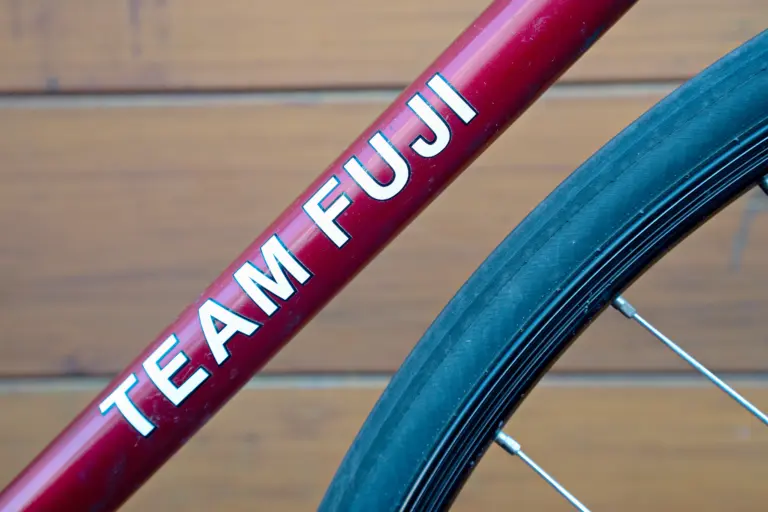 FujiGuide
Date a vintage Fuji from the serial number stamped with its build month and year, then confirm it against the model, decals, components and catalogs.
 BrooksGuide
What a Brooks saddle can tell you about its age: the date code from 1959, why the leather stamp is a lot number and the model numbers that date themselves.
 CampagnoloGuide
How to date Campagnolo parts from the firm's own 14 catalogs of about 1951 to 1986: the derailleur ladder, the crank changes, part numbers and addresses.
 BianchiHistory
Edoardo Bianchi from the Martinitt orphanage to Via Nirone, and the Reparto Corse that carried his innovations from Queen Margherita to Coppi's celeste.
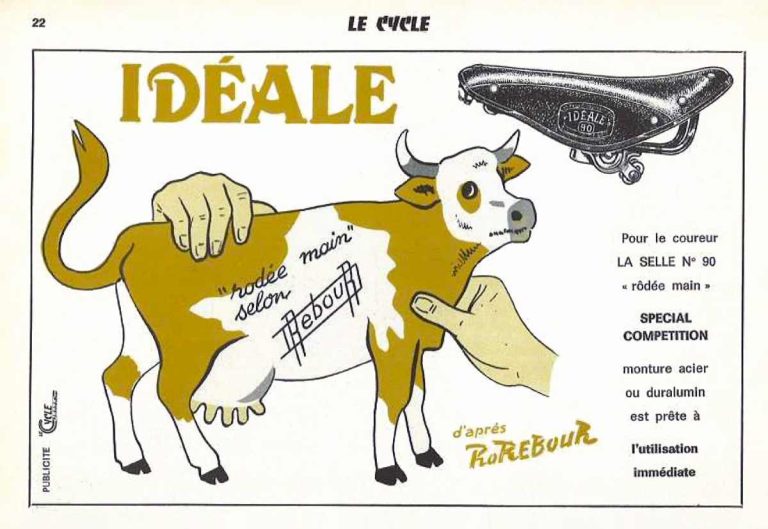 IdéaleHistory
Idéale saddles from Jean-François Tron's Paris workshop of 1890 through Marcel Berthet and the Dunlop and Cégédur years to 82 models and the revival.
 MasiHistory
Faliero Masi, tailor to Coppi, Anquetil and Merckx beneath the Vigorelli, and what followed: the California Masis, Breaking Away and the 3V Volumetrica.
 CarltonHistory
Carlton Cycles from Fred Hanstock's roadsters of 1896 through Dan O'Donovan's lightweights to Raleigh's takeover in 1960 and the end of the marque.
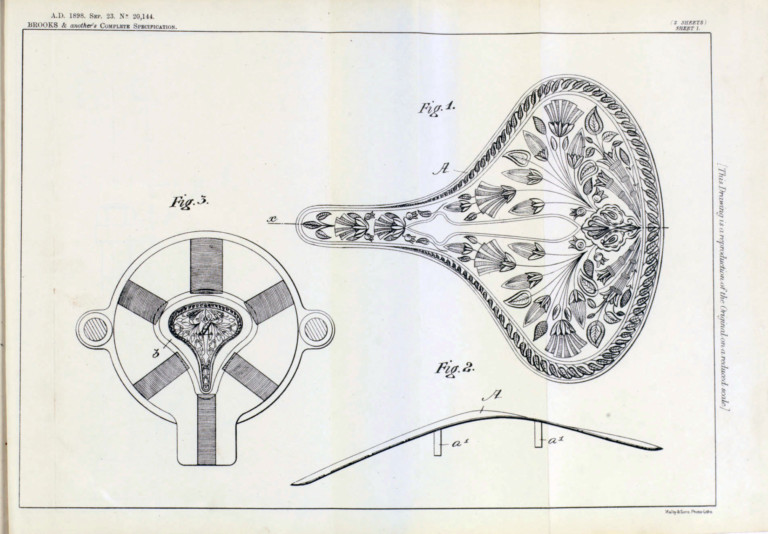 BrooksGuide
A database of Brooks saddle models from 1899 onward, restored from period catalogs: military, motorsport and the Kaydex, Plyflex and Zapho sub-brands.
 MercierHistory
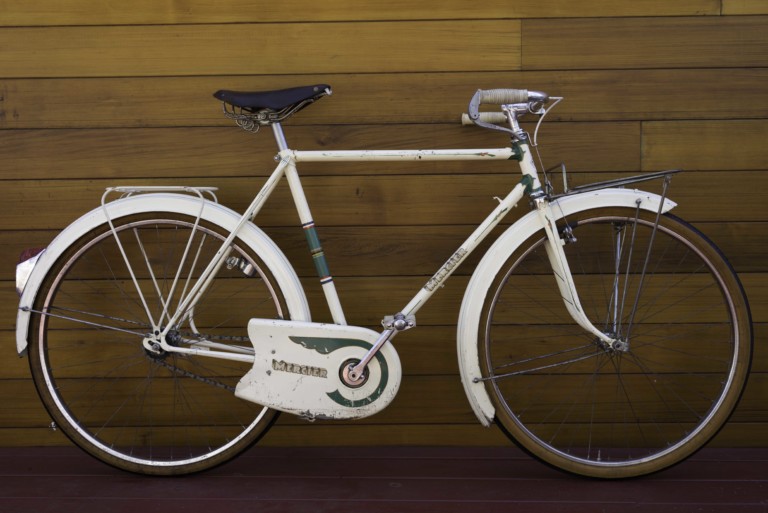
Cycles Mercier of Saint-Étienne from 1919 to the 1980s: the Pélissier brothers, 50 Tours de France, 25 sub-brands and the Méca Dural bicycles of Indochina.
 CampagnoloHistory
Tullio Campagnolo by the record: a farm laborer's son from Vicenza, a first patent in May 1933, the 1943 quick release and a conviction the histories omit.
 MavicHistory
Mavic's first century from Lyon in 1889: the Dura rim of 1934 painted to pass as wood in the Tour, neutral race service and the aero 1980s.
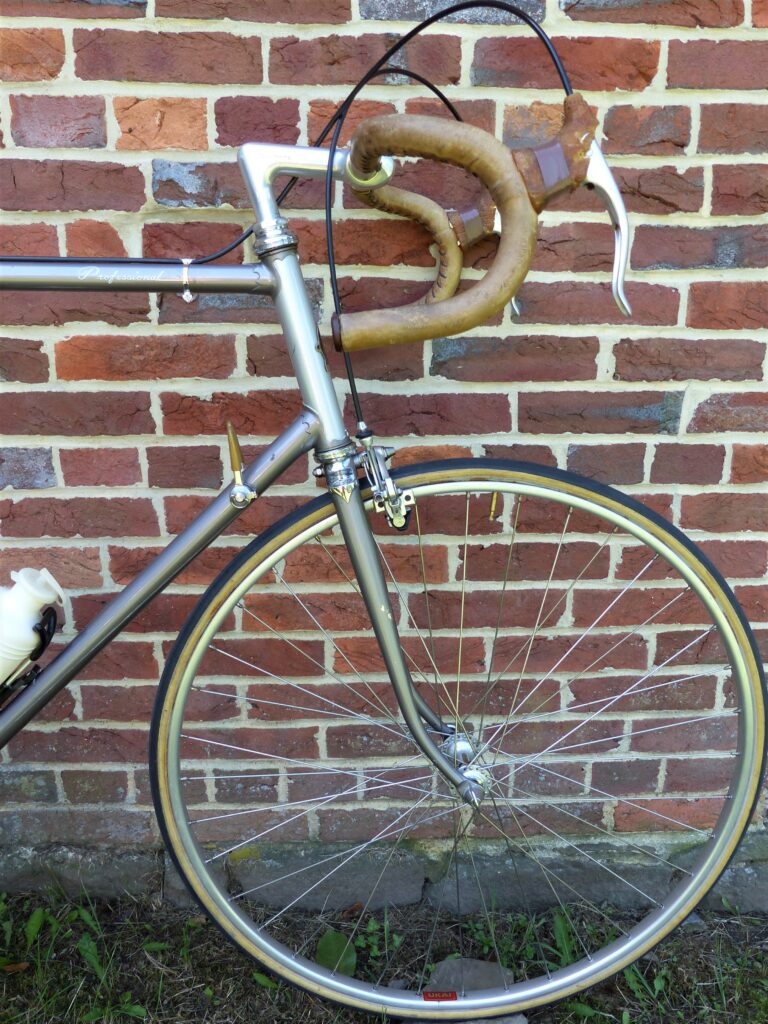 FujiHistory
Fuji from a Tokyo trading house of 1899 to the S10-S of 1971 that won over America: three Olympic teams, Valite tubing, titanium and two bankruptcies.
 BianchiGuide
A practical guide to dating a vintage Bianchi: why its frame number cannot give you a year, and how the tubing, the transfers, the components and Bianchi's own catalogs from 1912 to the late 1980s can.
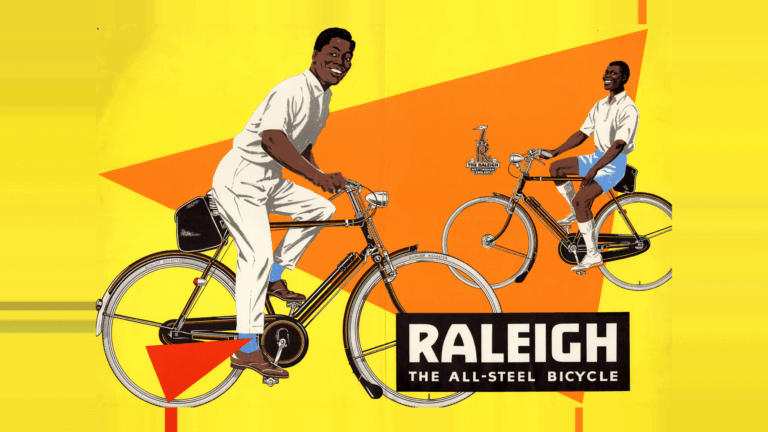 RaleighHistory
Raleigh from a Nottingham workshop to the world's largest bicycle maker: Sturmey-Archer, the Chopper, the Ilkeston Tour frames and the long decline.
A timeline of Raleigh from the Raleigh Street workshop of 1885 through Sturmey-Archer, the Chopper and the Ilkeston Tour frames to its present owners.
Cycles Automoto of Saint-Étienne: the cloverleaf marque of 1898, its four Tour de France wins of 1923 to 1926 and its merger into the Peugeot group.
Where the Bianchi eagle came from: the 1901 trademark, the Savoy arms added in 1905 and a 1927 short story in which an eagle concedes to a Bianchi bicycle.
Idéale saddles and clips model by model, with category, top and rail materials, size, weight and notes, drawn from catalogs of 1931 to 1981.
Ugo De Rosa, from his uncle's Milan workshop and his own firm of 1953 to the frames he built for Merckx and the steel and titanium his sons still refine.
An absurdly small French workshop that made the alloy chainring its calling and built the immortal Pro 5 Vis crankset. Meet Spécialités TA.
Cino Cinelli won Milan-San Remo in 1943 and founded Cinelli in 1948: the cockpit he rethought, the Super Corsa, his innovations and the Colombo handover.
A timeline of Bridgestone bicycles from Shōjirō Ishibashi's tabi of 1925 through the Grant Petersen years to the 1994 US closure and the BOB community.
A timeline of Fuji from a Tokyo import house of 1899 through a wartime renaming, three Olympics, the S10-S and Valite to two bankruptcies and new owners.
Cycles Alex Singer of Levallois-Perret since 1938: lightweight tandems, the Csuka succession, a frame in 60 hours and the constructeur's whole bicycle.
Date an Idéale saddle without a date code: the initials on its badge, when each model arrived, the alloy stamps, the rodée main mark and the catalogs.
A timeline of Campagnolo from Tullio's birth in Vicenza in 1901 through the 1933 patent, Gran Sport, Record and Super Record to the investment of 2026.
Hetchins of North London: Hyman Hetchin's gramophone shop, Jack Denny's Vibrant Triangle, the ornate lugs, Alf Hetchin's years and the American market.
A timeline of Schwinn from Chicago in 1895 through the Paramount, the Sting-Ray and the missed bike boom to two bankruptcies and Waterford's end in 2023.
Identify and date Mafac brakes without a date code: the Racer's arm markings, when each model arrived and how to read Mafac's three-digit lever code.
The key dates of Bianchi from the Via Nirone workshop of 1885 to Cycleurope: the Reparto Corse, celeste, Coppi and Gimondi, Autobianchi and Treviglio.
Care for a Brooks saddle by the maker's own advice: where Proofide goes, how to break it in, why tension ruins saddles and which folk remedies to avoid.
Mario Confente, from Olympic silver in 1964 to master builder at Masi California and his death at 34, told with his painter Jim Cunningham.
Maxi-Car hubs from Célestin Ripet's annular-bearing patent of 1933 through the Type 1 to Type 4 models to the last hub of 1999, in a gallery of images.
A timeline of Cycles Peugeot from the family foundry of 1810 and the lion of 1858 through Le Grand Bi to its record 10 Tour de France victories.
A timeline of Brooks England from the Birmingham harness maker of 1866 and its first saddles of 1882 through Raleigh, TI and Selle Royal to titanium rails.
Bianchi in pictures, from an 1880s Milan engraving through catalog covers, advertisements and team photographs to a modern celeste L'Eroica frameset.
Ernesto Colnago, from the Gloria factory and the broken leg that ended his racing to the Cambiago shop of 1954, the unbreakable fork, carbon and Ferrari.
A timeline of Mavic from Lyon in 1889: mudguards, the Dura rim, its owners and logos, neutral race service and the wheel systems of the 1990s.
A practical guide to dating a vintage Schwinn: telling a Chicago-built Schwinn from a Paramount and an import, finding the frame number, reading it with the right table and confirming the year with the catalogs and the components.
Brooks England in depth: its history and the whole saddle range, from chassis, springs and seat tops to military and motor saddles and the sub-brands.
Schwinn of Chicago from 1895: the American bicycle, Emil Wastyn's Paramount, the fillet-brazed sleepers, the bike boom it missed and Waterford.
A timeline of Cycles Mercier from its 1919 founding in Saint-Étienne through Poulidor and the Méca Dural to the 1985 bankruptcy and the revivals.
The build sheet of an original 1951 Legnano Tipo Roma in olive green: Magistroni crank, Campagnolo Paris Roubaix gears, Universal brakes and Fiamme rims.
Holdsworth from Margaret Holdsworth's cycling clothes and Sandy's Ashlone Cycle Works to the first frames, the Campagnolo team years and the 1987 sale.
The full build sheet of a 1989 Raleigh USA Team Pro Track: frame and fork with Cinelli lugs, Campagnolo C-Record Pista, Cinelli cockpit and silk tubulars.
The build sheet of a 2002 Nagasawa NJS keirin pista in electric blue: hand-cut windowed lugs, a TA Pista crank, Suntour Superbe Pro hubs and Nitto bars.
Jo Routens of Grenoble: his BRA rides, his 1939 Grand Prix Duralumin win, the Hugonnier years and constructeur bicycles built for everyday riders.
Pierre Caminade's Caminargent bicycles of the 1930s: aluminum frames with cast lugs, octagonal tubes and take-apart couplings, decades ahead of their time.
Stronglight from Haubtmann through Verrot Perrin's square-taper crank and the 49D to the bike boom, the 1993 bankruptcy and a rebirth under the same name.
Hobbs of Barbican, founded by Albert Hobbs in London in 1930: strong frames with hand-filed lugs, the Raceweight of 1933 and the wartime move to Dagenham.
Why the warrior of the 1176 Battle of Legnano rides on the head badge: Emilio Bozzi, the Wolsit patents, Binda, Bartali, Coppi and a quiet retirement.
André Maury, the Paris constructeur who tailored bicycles to their riders: his ateliers, the Emeriau enigma, the Speedy brakes saga and his quiet legacy.
A show randonneuse of 1948 from Cycles de France of Saint-Étienne: 650B wheels, Mafac cantilevers, Lefol fenders and the seat-stay gear levers Rebour drew.
Random Rebour: Random Bicycle Drawing by Daniel Rebour. Enjoy a different illustration by famous bicycle illustrator Daniel Rebour each visit.
A chronological sweep of Legnano from 1908 to 1965: catalog pages, advertisements, racing photographs and factory scenes from Emilio Bozzi's marque.
How to date a Pierce bicycle from Buffalo: the four head badges, where the frame number sits, a ladder of numbers from dated print and the model numbers.
A timeline of Stronglight from Achille Haubtmann's chainrings of 1906 and Verrot Perrin's Stronglight name to the takeover that joined them and today.
Bridgestone Japan's Eurasia system of 1976: randonneur and cyclosportif bicycles with more than 90 matching accessories that never reached the US.
A timeline of Colnago from Ernesto's broken leg in 1951 and his Cambiago shop of 1954 through Magni, the unbreakable forks and Ferrari to carbon fiber.
The build sheet of a 1970s Team Fuji track bike in Fuji 331 double butted tubing, from the Japanese track parts bin: Nitto, Sugino, Suzue, Araya and HKK.
Duralumin from Alfred Wilm's German alloy of 1909 to French bicycles and components of the 1930s, the Vitus 979, its disappearance and its return.
Bayliss-Wiley of Birmingham, a maker of hubs, freewheels and bottom brackets for nearly a century, including the first cassette hub of 1938.
The build sheet of a 1964 Legnano Pista in gold-green, serial FA7449: a cottered Magistroni crank, Cinelli cockpit, Fratelli Brivio hubs and Fiamme rims.
Rivendell Bicycle Works around 2006: Grant Petersen's small maker of practical lugged bicycles, at odds with the industry and loved and scorned for it.
Schwinn catalogs, dealer books and advertisements from 1939 to 1981: the Paramount, the balloon-tire cruisers, the Sting-Ray and Krates, parts and BMX.
A timeline of Legnano from the 1176 battle behind its emblem through Binda's five Giro wins and Coppi's 1942 hour record to the brand's modern revival.
The build sheet of a 1964 Bianchi Specialissima in original green: Columbus tubing, Campagnolo Record, Universal brakes and Fiamme Red Label rims.
All 16 Cycles Automoto posters from 1899 to 1950, by Mich, Roger Broders, Cappiello, Lajos Marton and others, each transcribed in the Poster Archive.
A timeline of Idéale from Jean-François Tron's Paris workshop of 1890 through Pont-Saint-Pierre and Marcel Berthet to the 1981 liquidation and the revival.
Photographs of Ernesto Colnago from 1940 on: the young racer at Gloria, the Cambiago framebuilder and the mechanic beside Eddy Merckx and the Molteni team.
The build sheet of a 1984 Colnago Super Pista in Columbus tubing with clover engravings, Campagnolo Record Pista parts, TTT Pista bars and Ambrosio rims.
A timeline of Cycles Automoto from Saint-Étienne in 1889 through four straight Tour wins of 1923 to 1926 to Peugeot's control and the marque's end in 1962.
Louis Moire's Goëland of Paris, about 1935 to 1970: affordable cyclotouring bicycles from contract framers, an early Vélo Fédéral and touring trailers.
A timeline of MAFAC from Auguste Bourdel's Securité cantilever of 1946 and the 1951 Racer center-pull to the side-pull era, Spidel and the decline.
The build sheet of an original 1963 Cinelli Super Corsa, serial 585: Campagnolo Record, TA cranks, Mafac Top 63 brakes and Mavic Professionnel rims.
A timeline of Alex Singer from his birth in 1905 and the Levallois-Perret atelier of 1938 through record-light tandems and singles to the Csuka succession.
A timeline of Carlton Cycles from 1896: the O'Donovan years, Raleigh's purchase in 1960, its handbuilt frames from Worksop and the closure of 1982.
A practical guide to dating a vintage Motobécane: telling the French bicycles from MBK and the modern imports, what the frame stamps may mean, and how the 1979 catalog, the tubing and the components date the bicycle.
Daniel Rebour drew bicycles for Le Cycle for almost 30 years. Who he was, his Paris-Brest-Paris on a tandem and how to read his numbered pen plates.
The build sheet of an original 1940s Cavalieri from Verona: Columbus steel, Campagnolo Cambio Corsa gears, a Fratelli Brivio crank and Nisi Toro rims.
A timeline of Gitane from Marcel Bruneliere's farm-parts trade at Machecoul in 1925 through Anquetil, Hinault and Renault to the Cycleurope years.
A timeline of Masi from Faliero Masi's shop under Milan's Vigorelli velodrome through Carlsbad and Breaking Away to Alberto Masi's 3V Volumetrica.
A timeline of De Rosa from Ugo's birth in Milan in 1934 and his shop of 1953 through Géminiani, Merckx and Molteni to titanium, aluminum and carbon.
The build sheet of a January 1947 Hobbs of Barbican Superbe, frame A7 1671, in Reynolds 531: a Huret Svelte derailleur, Williams crank and Brooks saddle.
The build sheet of a 2012 Surly Big Dummy longtail cargo bike: a Jones H-Bar Loop, Shimano XT gears, Avid Elixir disc brakes and a padded passenger seat.
The build sheet of a rare 1950 André Maury 650B randonneur, frame 3603: fillet brazing, internal wiring, Cyclo gears, Mafac Criterium brakes and Maxi hubs.
The build sheet of a 1951 Rene Herse Concours randonneur: Reynolds 531, Herse cantilevers and triple, Le Cyclo gears, Maxi-Car hubs and Lefol fenders.
The build sheet of a 1967 Jo Routens randonneur in Reynolds 531, restored by Mariposa in 2017: a Routens front changer, Maxi-Car hubs and Lefol fenders.
The build sheet of a Cannondale CAAD aluminum road tandem: Shimano Ultegra 10-speed, Avid BB7 disc brakes, White Industries hubs and a child seat.
The build sheet of a 1955 Bianchi Campione del Mondo in celeste: Campagnolo Gran Sport gears and hubs, Universal brakes, Ambrosio bars and Fiamme rims.
A timeline of Jo Routens of Grenoble, 1913 to 2014: the BRA, the 1939 Grand Prix Duralumin, the Hugonnier years and three Paris-Brest-Paris tandem wins.
Bianchi's embossed, cord-tied motoring brochure of 1909, with the eagle and House of Savoy shield, from the years Bianchi built cars as well as bicycles.
A timeline of Hobbs of Barbican, founded by Albert Hobbs in 1930: the Raceweight, wartime Dagenham, frame numbers, the Blue Riband and a 1970s revival.
A timeline of Hetchins of North London from 1934: the Vibrant Triangle, Tony Merkens at Herne Hill, Jack Denny's lugwork and Alf Hetchin's years.
A timeline of Bayliss-Wiley from the pen-nib maker Perry of 1824 through the first cassette hub of 1938 to the Renold years and the end in 1969.
J. Lefol of Courbevoie and its hammered Le Martelé aluminum fenders: an aluminum monopoly from 1936 to 1939, the postwar catalog, the peak and the decline.
Idéale saddles in pictures: the Pont-Saint-Pierre works, advertising from 1894 to the 1970s, catalogs, Marcel Berthet's records and the duralumin No. 90.
The build sheet of a 1940s randonneuse with twin top tubes by an unknown constructeur: Maxi hubs on 650B rims, Simplex gears and Lefol Le Martelé fenders.
René Herse, the aircraft mechanic who became the greatest of the French constructeurs: his duralumin parts, his wins at the Concours de machines and Paris-Brest-Paris, his champion daughter Lyli and the revival of his name.
In the golden age of professional cycling, the frame that crossed the finish line of a Grand Tour carried a promise stamped on its down tube. A glittering badge -- often Bianchi, Colnago, Pinarello, Atala -- sold the illusion…
George N. Pierce of Buffalo, from birdcages and tricycles to the chainless shaft-drive bicycles of the 1890s and Pierce-Arrow, with a guide to dating one.
The build sheet of an original 1958 Goëland Randonneur: Reynolds main tubes, a TA triple, Nivex derailleur, Mafac cantilevers, Maxi-Car hubs and 650b rims.
Alvin Drysdale of New York, builder of track and six-day bicycles from the late 1920s: the Red Devil, Velox and Alvin, his distributors and his last years.
A timeline of Maxi-Car from 1880 to 1999: Célestin Ripet's annular-bearing patent, E. Depalle's MAXI hubs, the 1962 trademark and the Type 1 to Type 4.
The build sheet of a 1937 Caminade Caminargent Bordeaux-Paris from the Embacher Collection: octagonal aluminum tubes, bolted lugs and a Stronglight crank.
Bicycle and component maker logos from their classic years, about 1930 to 1980, redrawn one by one from catalogs, advertisements, transfers and bicycles.
Five sepia photographs of Hugonnier-Routens bicycles of 1946 to 1948, set beside the catalog drawings made from them: a mixte, a tandem and randonneurs.
From a 1947 Clamart workshop to Sissonne today, the key dates, models and milestones of Spécialités TA, the tiny French chainring legend.
What made a French constructeur, from the Concours de machines to Paris-Brest-Paris, and a guide to Ebykr's stories of René Herse, Alex Singer, Jo Routens, André Maury, Goëland, Caminade and the Lefol fender works.
Caminade and the Caminargent in pictures: advertisements and press clippings, the 1936 French and 1937 English catalogs and detail shots of surviving aluminum bicycles.
Cycles Mercier in pictures: the Saint-Étienne factory, Pélissier, Magne and Poulidor, catalogs and advertising, duralumin bicycles and a 1950s porteur.
Jo Routens in pictures: Grenoble advertisements and covers, the 1946 Hugonnier-Routens catalog photographs and drawings and detail shots of surviving randonneurs.
Peugeot posters, brochures and advertisements from about 1820 to 1981: the lion, the Beaulieu factory, the 1952 catalog, the PX-10 and Tati's Jour de Fête.
A timeline of Pierce of Buffalo, 1863 to 1940: birdcages and tricycles, the Queen City, the cushion-frame chainless, the Pierce Cycle Company and Angola.
Original Spécialités TA advertisements, catalog pages and technical illustrations spanning 1948 to 1983, from the Clamart chainring and crankset maker.
A timeline of Duralumin, named by Alfred Wilm in 1909: French components of the 1930s, Gnome et Rhône bicycles of 1946 and the Vitus 979 of 1979 to 1992.
A timeline of J. Lefol, 1871 to 1961: the Le Martelé fender of 1936, the move to Courbevoie, Le Paon, brakes, chain guards and a 1949 rim patent.
A timeline of Pierre Caminade of Paris, about 1910 to 1951: the Rectiligne derailleur and the aluminum Caminargents that came apart with one wrench.
A timeline of Cinelli from Cino's Milan-San Remo win of 1943 through the Super Corsa, Bivalent hubs and Ole Ritter's 1974 bike to the Laser and the Ram.
A timeline of Holdsworth from Margaret Holdsworth's Aids to Happy Cycling catalog of 1922 through the Ashlone Cycle Works, F. H. Grubb and Claud Butler.
A timeline of Terrot of Dijon from Charles Terrot's workshop of 1887 through motorcycles, the Levocyclette and postwar racing to the last bicycles of 1970.
A timeline of André Maury from the Boulevard Pasteur atelier of 1929 through the Speedy brake of 1938 and the threadless stem of 1948 to S.E.C.T.A.M.
Rare company photographs of Idéale, shared by Vincent Toubeau: the Pont-Saint-Pierre works, the 1935 mounting atelier and the 1929 Paris Salon.
André Maury in 28 Rebour drawings: the innovations of a Paris constructeur at his peak from 1946 to 1951, from threadless stems to internal lighting.
Every sub-brand and OEM deal of Cycles Mercier, about 25 in all, from Fééric and Monspor to Duravia, Spoutnik and the Bobet, Leducq and Pélissier bicycles.
The build sheet of an all-original 1984 Colnago Super Pista in Saronni red: Columbus SL, clover engravings, Campagnolo Record Pista and 3TTT Pista bars.
The build sheet of a chromed 1948 Automoto Concours Sportif show bicycle: hand-cut lugs, clover fork inserts, a Huret three-speed and an Idéale saddle.
The build sheet of a cream 1950s Mercier porteur: front and rear Mercier racks, a Perry coaster hub, a MAFAC Criterium front brake and Darnault fenders.
The build sheet of an all-original 1950s Le Chemineau randonneur: fillet brazing, its own three-speed derailleur, a Stronglight crank, racks and fenders.
Terrot of Dijon, from Charles Terrot's textile workshop of 1887 through bicycles, motorcycles and racing wins to the end of its own production in 1961.
How the French magazine Système D showed readers in 1926 to straighten a bent steel rim at the roadside, with the original French text and a translation.
The build sheet of an unrestored 1930s Automoto 650B road and path bicycle: Gloria rod brakes, ballon fenders, a rear rack and a 1937 registration plate.
The build sheet of a 1950s Jo Routens 650B randonneur restored by Cycles Grand Bois: fillet brazing, inward cantilevers, Cyclo gears and Maxi-Car hubs.
Terrot's posters of the 1890s to the early 1950s, all 21 transcribed: the rider outrunning a train, Tamagno's seven sheets and Dréville's downhill reader.
The build sheet of a 1939 Cycles Rafale three-speed ridden by Roger Du Peuty: a Bernard Carré fork, Exeltoo hubs, an S.L.B. derailleur and 650B rims.
An interview with the Italian illustrator Stefano Dragonetti on drawing lugged bicycles, Daniel Rebour, Pegoretti and Italy's forgotten contract builders.
A box of Maxi-Car hubs recalls Sid Sawyer, the Pittsburgh neighbor who rode 15,000 miles a year, his 80,000-mile hubs and a ride on his Alex Singer tandem.
No article matches all of these
Remove a filter, or search every page on Ebykr instead.
The Ebykr Digest
New articles, timelines, catalog finds and registry activity — assembled from the archive once a month. Your address is never shared.
Double opt-in. One email per month. Unsubscribe at any time with one click.